

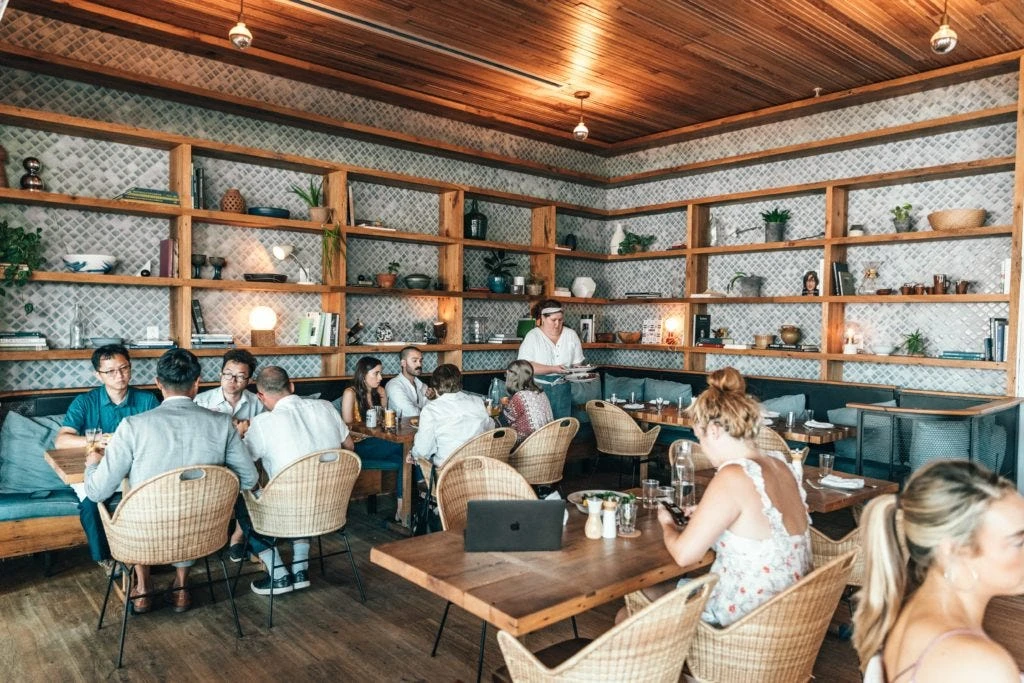
Read enough restaurant financials and a strange skill develops, one that never quite switches off afterward: you can walk into a dining room and estimate the P&L from the furniture. Not precisely, of course, but directionally, the way an analyst reads a factory floor. The seating is the room’s capital equipment, and capital equipment always testifies about the business running it.
The testimony is worth learning to hear, whether you’re an operator, an investor, or simply the kind of reader who likes knowing how businesses actually work. The restaurant tables and chairs in any venue encode decisions about capacity, turn strategy, spend-per-visit, and capital discipline, which is to say: the margin structure, rendered in wood and steel. Here’s how to read it.
Margins Live in Inches
Restaurant economics start from a brutal baseline: net margins in full service commonly run single digits, which makes every percentage point a survival matter. Analysis of the industry’s cost pressure lands quickly on the fixed-cost problem, and the dining room is where fixed cost meets revenue capacity most directly.
Furniture dimensions set the capacity. Chair widths, table footprints, and clearance requirements determine covers per square foot, and two rooms paying identical rent can differ by a full table’s worth of seats purely on specification. The tighter operator isn’t cramming; they’re specifying, and the margin difference is structural.
The Turn-Time Signature
Look at what the seating is built to encourage and the revenue model announces itself, because every profit margin strategy eventually becomes a furniture strategy. Firm, upright chairs and compact tables: a volume operation, engineered for comfortable-but-brisk visits and three turns a night. Deep booths, padded seats, generous tops: a dwell operation, built to hold guests through the high-margin back half of the check.
- Volume rooms monetize throughput; their furniture politely keeps things moving.
- Dwell rooms monetize duration; their furniture makes leaving feel premature.
- Confused rooms mix the signals and leak margin in both directions.
The confused room is the diagnostic goldmine: plush seating in a concept that needs turns, or punishing chairs under a wine list that needs lingering. Furniture fighting the model is a margin wound, visible from the doorway.
Capital Discipline, On Display
The furniture’s condition and coherence testify about management the way a factory’s maintenance culture testifies about its output quality. A matched, maintained fleet, even a modest one, signals an operator who plans capital cycles. A patchwork of failing lookalikes signals someone who bought on price and got invoiced on lifespan.
The operating margin impact is quantifiable: commercial-grade seating annualizes cheaper than residential product that replaces every two years, before counting the downtime, the mismatch drift, and the quiet check-size tax of visible wear. Investors touring a prospective acquisition can read years of capital discipline in ten minutes on the floor.
The Revenue Archaeology of a Floor Plan
Where the furniture rests tells the remainder of the story. Booth runs along the walls: the operator understands enclosure sells and walls make money. A bar with real stools and backs: beverage margin is being taken very seriously. High-tops by the door: the wait itself has been monetized as drink income.
Dead zones testify just as loudly. A six-top that’s too big and never fills on a weeknight, a gorgeous corner seat that no one ever uses, a patio full of fading indoor product: each one represents deferred revenue or deferred maintenance, sitting right there in plain sight of every guest. The floor plan is the strategy paper, published nightly.
What the Best Operators Do Differently
The pattern among high-margin independents is consistent enough to summarize in a paragraph. They write down the model first. They specify furnishings from their revenue model instead of showrooms. They buy commercial grade once, standardized for reorder, and phase acquisitions to depreciation schedules. They do a floor audit quarterly, seating, stability, capacity leaks, with the same rigor as food cost.
None of it needs scale. It simply means treating the dining room as what the financials already say it is: the manufacturing floor of the whole enterprise, where every dollar of revenue is physically generated.
Sitting on the Answer
Next time a restaurant impresses or disappoints you, run the analyst’s exercise before the check arrives. Count the covers, clock the comfort, read the condition, and note whether the furniture agrees with the concept’s revenue model or argues with it. Two minutes of observation, and the margin story will be sitting right there, holding up dinner, more candid than any press release the group ever issued.
Because the business of restaurants was never really about food alone; it’s about converting square footage and hours into checks, at a spread that survives the rent. The tables and chairs are the machinery of that conversion, and like all machinery, they reward the businesses that chose them deliberately, and quietly bill the ones that didn’t. There’s a final irony the trade quietly enjoys: the furniture that reveals a restaurant’s margins is also the furniture that builds them, which means the analyst’s tell and the operator’s tool are the same object, purchased on the same order form, doing both jobs at once for a decade. The furniture, as usual, knew it first.