

Automatic driveway gates work best when their design follows the site’s constraints rather than forcing the site to fit the equipment. On sloped approaches, narrow aprons, or long driveways, the wrong choice between swing and slide gates, an underpowered operator, or inadequate footings can turn a convenient upgrade into an ongoing headache. Before selecting hardware or finishes, focus on measurable conditions such as grade, setback, and power distance. That initial evaluation determines gate type, operator size, safety device placement, and even where to put a keypad or intercom so drivers can reach it without stretching or blocking the road.
-
Measure Slope, Swing Arc, and Setback Before Choosing Gate Type
Start with the driveway grade across the gate line and along the approach. A typical swing gate needs an unobstructed arc, and even a 3 to 4 percent rise can cause a gate leaf to drag on gravel or asphalt. If space allows, a slide gate with a V track or a cantilever design often handles challenging grades better because it travels parallel to the fence line. If you plan Salem electric gate installation with F&W Fence Co. Inc., confirm swing clearance or slide pocket length early so the selected operator and gate frame match the site, rather than forcing costly changes later.
Setback from the street and property line also affects how a vehicle waits while the gate opens. Leave enough space on your side of the property line so a pickup or delivery van can pull clear of traffic. On short aprons, an inward-swinging gate may conflict with available driveway space, while a slide gate or another permitted configuration may solve the problem. Remember that a slide gate requires lateral space for the panel to travel, generally equal to the gate opening plus additional room for the tail section on cantilever designs. Plan this area so it does not interfere with utilities, mailboxes, drainage, or landscaping.
-
Power, Conduit, and Access Control Where You Need Them
Gate operators may require line voltage at the control cabinet, while keypads, card readers, and intercoms often use low voltage circuits. Qualified professionals should design and install electrical service, conductor sizing, conduit, grounding, and protection according to manufacturer instructions and applicable electrical codes. Long electrical runs can increase voltage drop, making early planning especially important.
Crossing a paved driveway may require boring beneath the surface rather than cutting through it, which can preserve the pavement and reduce future water intrusion. Where conventional electrical service is difficult to provide, and solar exposure is adequate, some gate systems can operate with solar charging and battery storage. However, shading, seasonal weather, gate weight, usage frequency, and operator requirements all influence whether solar power is practical.
Place access devices where drivers can reach them comfortably without leaning excessively from the vehicle. Position a pedestal-mounted keypad based on vehicle access needs, property layout, accessibility considerations, and manufacturer recommendations. If visitors need directory assistance, a video or audio call box at the same access point can simplify entry.
Emergency access requirements vary by jurisdiction. Fire departments or other authorities may require specific approved devices or access arrangements, so confirm local requirements before installation. Planning spare conduit for future additions, such as another keypad, camera, or license plate reader, can make later upgrades much easier.
-
Posts, Footings, and Ground Conditions That Keep Gates Stable
Swing gates place considerable leverage on hinge posts, so the post and footing must resist lateral loads and support the gate’s weight. Footing depth and dimensions should reflect gate size, soil conditions, frost requirements, wind exposure, and local construction standards.
Wet sites require particular attention to drainage. Water collecting around footings can contribute to soil movement, corrosion, or seasonal instability. Proper grading and drainage around gate foundations help protect alignment over time.
For slide gates that use a V track, a stable, properly prepared base helps keep the track aligned and lets the rollers travel smoothly. Cantilever gates eliminate the ground track and instead rely on support rollers and a counterbalanced frame, which can be useful where gravel, leaves, snow, or ice would otherwise interfere with ground-mounted tracks.
Select hardware for the gate’s weight and expected wind exposure. Broad solid panels catch considerably more wind than open picket or perforated designs, increasing loads on posts, hinges, frames, and operators.
Corrosion-resistant hardware can also improve durability in wet climates. Adjustable components may accommodate minor alignment changes over time, but correct structural sag, foundation movement, or operator strain rather than repeatedly adjusting.
-
Safety Devices and Standards That Shape the Layout
Design automated gate systems with entrapment protection and other safety measures required by applicable standards, codes, manufacturer instructions, and local regulations.
Photoelectric sensors can monitor portions of the gate travel area, while approved monitored edge sensors may provide additional protection where contact hazards exist. The exact number, placement, and type of safety devices depend on the gate design and operator.
Vehicle detection systems can also help control gate operation. In-ground loop detectors or other approved sensing technologies can identify approaching or waiting vehicles, but their placement should be coordinated with the gate’s travel path and access layout.
Do not treat these safety devices as optional accessories or bypass them to simplify installation. A qualified gate professional can determine which monitored devices the specific operator and gate configuration require.
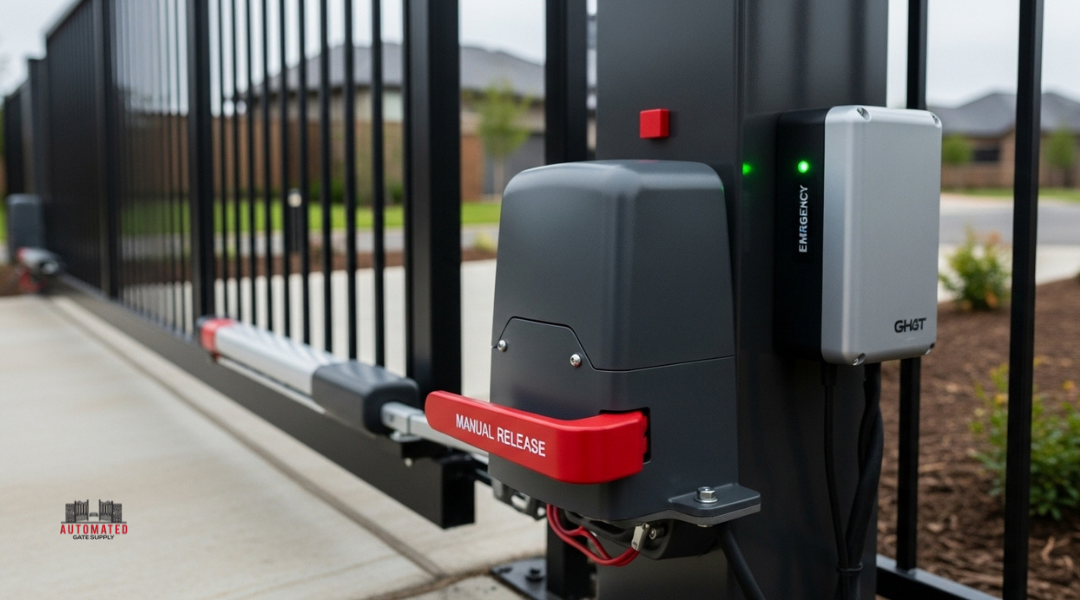
Manual release provisions are equally important. Power outages, storms, or equipment faults can leave a gate unable to operate automatically. Make sure the manual release is safely accessible and that household members understand the manufacturer-approved procedure for using it.
Keep any required release key or access device in a secure but practical location and test the manual release during scheduled maintenance.
-
Weather Resilience and Upkeep in the Pacific Northwest
Frequent rain, winter freezes, moss, and leaf litter can affect moving gate components. If you choose a V-track slide gate, keep the travel path clear of gravel, leaves, and other debris, and inspect the rollers according to the manufacturer’s maintenance instructions.
Cantilever systems avoid ground tracks but still require periodic inspection of support rollers, hardware, and protective caps. Swing gates should have hinges and other moving components maintained with lubricants approved for the specific hardware and climate.
Also inspect battery backup systems periodically, and check terminals, charging components, and enclosures for corrosion or water intrusion.
Material and finish choices involve trade-offs between appearance, weight, corrosion resistance, and maintenance. Powder-coated galvanized steel provides strength and corrosion protection as long as the coating remains intact. Aluminum resists rust but may require additional structural design on long spans. Wood infill offers privacy but expands and contracts as moisture levels change.
Stainless or appropriately coated fasteners can reduce corrosion staining, while routine cleaning helps remove road residue, organic debris, and contaminants that can attack finishes.
A simple seasonal maintenance routine that includes checking safety sensors, cleaning optical surfaces, inspecting accessible hardware, and testing vehicle detection and manual release functions can reduce the risk of inconvenient failures during wet or freezing weather.
Let Site Constraints Drive the Design
Constraint-driven planning turns an automatic gate from a wish-list item into a reliable daily feature. Measuring slope and swing clearance, planning electrical and access control routes early, sizing foundations for actual loads, and incorporating the required safety systems allow the major decisions to be made before equipment is installed.
When the site’s real conditions guide the design, the operator can work within its intended limits, the gate frame is more likely to remain aligned through wet seasons, and future upgrades are easier to accommodate.
That thoughtful planning separates a gate that constantly needs attention from one that operates reliably and becomes a natural part of everyday use.