

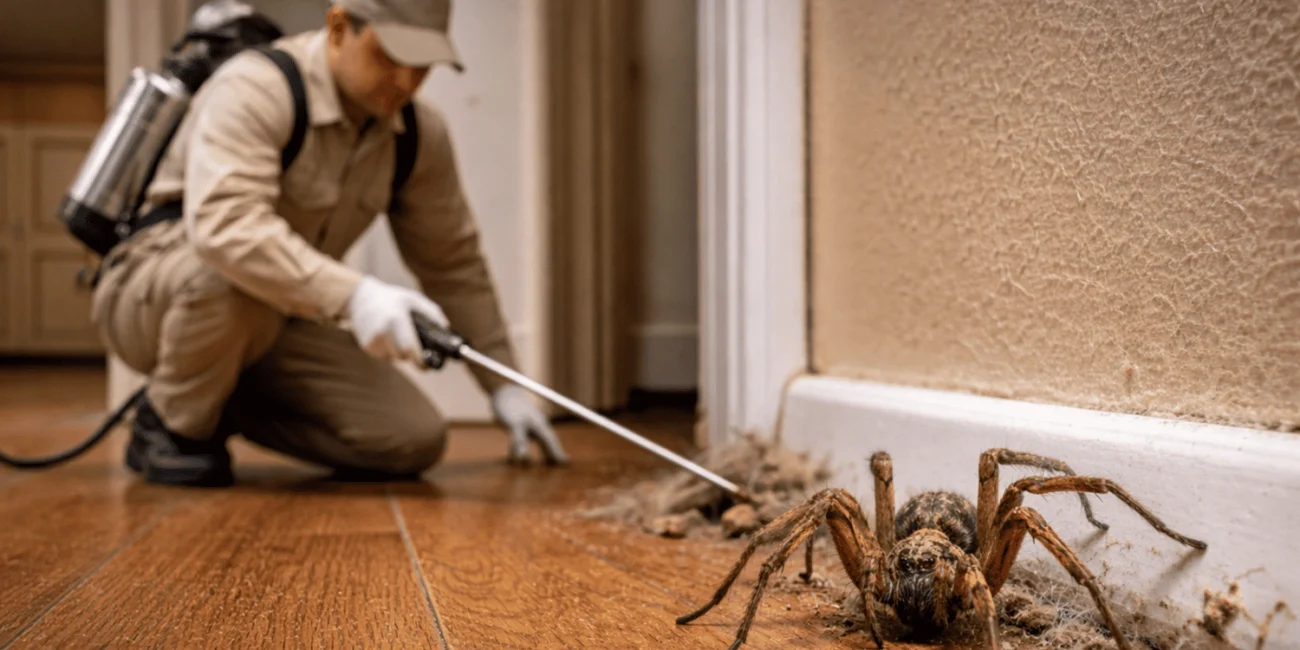
Spiders are a common part of many outdoor and indoor environments, and while most species are harmless to people, their presence can become a concern when they appear in large numbers or establish webs around frequently used areas. Finding webs around windows, doors, porches, garages, storage spaces, or outdoor structures can make a property look neglected and may indicate that the surrounding environment is providing suitable conditions for spiders and their prey. Understanding why spiders are attracted to certain areas and how to reduce those conditions is an important part of maintaining a comfortable and well-maintained property.
Spider Control involves more than simply removing visible webs. Spiders often remain hidden in cracks, corners, vegetation, storage areas, and other sheltered locations. They may also be attracted to properties where insects are abundant because many spider species feed on insects. For that reason, controlling the insect population around a property can play an important role in reducing spider activity.
A comprehensive approach begins with identifying the type and extent of spider activity, inspecting likely hiding areas, removing webs and egg sacs where appropriate, reducing potential food sources, sealing access points, and improving conditions around the property. When spider activity is persistent or difficult to manage, professional pest management can provide a more thorough inspection and treatment plan.
Understanding Spider Behavior
Spiders are predators that play an important role in controlling other insect populations. Rather than feeding on plants, food waste, or household materials, they generally rely on insects and other small organisms for nourishment. This means a property with a high number of flying or crawling insects may naturally attract more spiders.
Different species also have different habits. Some build webs to capture prey, while others actively hunt. Some prefer dark and undisturbed locations, while others may be found around exterior lighting where insects gather.
Understanding these differences is useful because simply removing webs may not address the reason spiders are present. If the surrounding environment continues to provide food, shelter, and suitable conditions, new spiders may continue to appear.
Common Places Where Spiders Are Found
Spiders can establish themselves in many areas around a property. Indoors, they may be found in basements, garages, attics, storage rooms, closets, corners, and areas that are rarely disturbed.
Outdoor locations can include porches, patios, sheds, fences, landscaping, woodpiles, exterior walls, and spaces beneath decks. Web-building species may favor locations where structures provide support for webs while nearby lighting attracts insects.
Corners and sheltered spaces are particularly important because they offer protection from weather and regular human activity. Areas that are rarely cleaned may gradually accumulate webs, egg sacs, and insect debris.
A thorough inspection should therefore include both visible areas and concealed spaces rather than focusing exclusively on rooms where spiders have recently been seen.
Why Spiders Enter Buildings
Spiders may enter buildings for several reasons, including the availability of food, shelter, moisture, and suitable hiding places. Small gaps around doors, windows, utility penetrations, vents, and other openings can provide access.
Outdoor lighting can also indirectly contribute to spider activity. Lights may attract flying insects, which in turn provide a food source for spiders. As a result, webs may appear around light fixtures, windows, and entryways.
Seasonal changes can also influence spider movement. Temperature, humidity, rainfall, and changes in insect populations can affect where spiders are found.Reducing access points and addressing conditions that attract insects can therefore help reduce the number of spiders entering a building.
Identifying a Spider Problem
Seeing an occasional spider does not necessarily indicate a significant infestation. Spiders are widespread and may occasionally enter homes or other structures without establishing a large population.
A larger concern may exist when webs appear repeatedly despite cleaning, numerous spiders are found in different areas, or activity is concentrated around specific entry points and structures.
Egg sacs can also indicate that spiders are reproducing nearby. Their presence may warrant closer inspection of surrounding areas.Correct identification can be helpful because not all spiders require the same management approach. Some species prefer vegetation and outdoor structures, while others may spend more time indoors.
When identification is uncertain, photographs or professional inspection can help determine what type of spider is present and whether additional action is necessary.
Reducing Spider Food Sources
Because spiders feed on other insects, reducing the insect population can make a property less attractive to them. Outdoor areas should be examined for conditions that encourage insects, such as standing water, excessive moisture, overflowing trash, or unnecessary exterior lighting.
Doors and windows should have properly functioning screens and seals. Cracks and openings around the exterior can also provide access for insects and spiders.
Food waste should be stored appropriately, and garbage containers should remain closed. Outdoor pet food should not be left exposed for extended periods because it can attract insects and other pests.Addressing the food source can have a broader impact than simply killing individual spiders because it reduces the environmental conditions supporting their presence.
Removing Webs and Egg Sacs
Regularly removing visible webs can improve the appearance of a property and discourage spiders from using the same locations repeatedly. Webs can be removed with a broom, vacuum, or other appropriate cleaning method depending on the surface.
Egg sacs should also be addressed when discovered. Some species produce multiple egg sacs, and allowing them to remain undisturbed may contribute to future spider activity.
Care should be taken when removing webs from difficult-to-reach areas. Ladders should be used safely, and protective equipment may be appropriate when cleaning heavily infested or dusty locations.Web removal alone is not a complete control method, but it can be a useful part of a broader maintenance routine.
Sealing Entry Points
One of the most practical long-term strategies is reducing the number of openings through which spiders and insects can enter. Doors should close tightly, and damaged weather stripping should be replaced when necessary.
Window screens should be inspected for tears or gaps. Cracks around frames, utility lines, vents, and other penetrations can also be sealed using suitable materials.
Particular attention should be given to areas where exterior walls meet foundations, roofs, doors, and windows. Small openings may seem insignificant, but they can provide access to a variety of pests.Sealing gaps does not eliminate outdoor spider populations, but it can reduce opportunities for spiders to move indoors.
Improving Exterior Lighting
Exterior lighting can influence spider activity because many insects are attracted to light. When insects gather around a light source, spiders may build webs nearby to take advantage of the concentrated food supply.
Where practical, lighting can be positioned or adjusted to reduce direct attraction around doors and windows. Fixtures that minimize unnecessary illumination around entry points may help reduce insect activity.
Lighting should still provide adequate visibility for safe movement. The goal is not simply to eliminate outdoor lighting but to use it strategically.Motion-activated lights or appropriately positioned fixtures may be useful in certain areas, depending on the property’s needs.
Maintaining Landscaping
Landscaping can influence spider activity around buildings. Dense vegetation, piles of leaves, excessive ground cover, and other sheltered areas can provide locations for spiders and their prey.
Keeping plants appropriately trimmed and maintaining a reasonable separation between dense vegetation and building surfaces can improve visibility and airflow.
Organic debris should be removed regularly, particularly from areas immediately adjacent to walls and entrances.
Firewood, lumber, and stored materials should be kept organized and, where appropriate, elevated from the ground. Such areas can provide shelter for insects and spiders when left undisturbed.Good landscape maintenance does not eliminate spiders from an outdoor environment, but it can reduce the number of sheltered areas immediately surrounding a building.
Managing Moisture
Some spiders and the insects they prey upon may be more common around damp or humid areas. Leaking pipes, poor drainage, clogged gutters, and persistent standing water can create conditions that support insect activity.
Property owners should inspect areas around foundations, outdoor faucets, irrigation systems, and drainage points for unnecessary moisture.Gutters and downspouts should direct water away from structures. Poor drainage can create damp conditions that encourage insects, which may indirectly attract spiders.
Indoor moisture should also be addressed. Leaks, condensation, and poorly ventilated areas can contribute to broader pest problems.Correcting moisture issues can therefore support spider management while also protecting the building from other forms of damage.
Keeping Storage Areas Organized
Garages, sheds, attics, basements, and storage rooms can provide ideal hiding places because they are often dark and rarely disturbed.
Cardboard boxes, unused furniture, stacked materials, and other stored items can create numerous cracks and protected spaces. Keeping belongings organized and reducing unnecessary clutter can make inspections easier.
Storage items should be kept off the floor where practical, particularly in areas where moisture may occur.
Regularly moving and inspecting stored belongings can also discourage pests from establishing undisturbed hiding places.A clean, organized storage environment is easier to inspect and maintain than a crowded area with numerous inaccessible spaces.
Using Vacuuming as a Management Tool
Vacuuming can be useful for removing visible spiders, webs, and egg sacs from accessible indoor areas. It can also remove insects and debris that may serve as part of the local food chain.
Corners, ceiling edges, window frames, behind furniture, and other sheltered areas can be included in routine cleaning.
When vacuuming spiders or webs, the equipment should be emptied or maintained according to the manufacturer’s instructions, particularly if a significant number of pests have been collected.Regular cleaning is most useful as part of a broader strategy. If new webs appear continuously, the underlying conditions should also be investigated.
Chemical Treatments and Responsible Use
Chemical treatments may be considered when spider activity is persistent or when environmental and exclusion measures are not sufficient. Products vary considerably in their active ingredients, application areas, and safety requirements.
Any pesticide should be used strictly according to its label. Applying a larger amount than recommended does not necessarily improve results and can create unnecessary exposure or environmental concerns.
Treatment should focus on appropriate areas rather than indiscriminately applying chemicals throughout occupied spaces.
Professional pest-control technicians can evaluate the property and determine whether chemical treatment is appropriate. They can also identify likely entry points and conditions that may be contributing to continued activity.
Professional Pest Management
Professional Spider Control can be particularly useful when spider activity is widespread, recurring, or associated with difficult-to-access areas. Professionals can inspect both indoor and outdoor environments to identify conditions supporting the problem.
A thorough service may involve locating webs and egg sacs, examining entry points, identifying insect activity, evaluating landscaping, and checking sheltered areas around the structure.
Depending on the situation, the treatment plan may combine sanitation, exclusion, habitat modification, monitoring, and targeted applications.
Property owners should ask about the treatment process, preparation requirements, products being used, follow-up procedures, and recommendations for preventing future activity.
A clear plan is generally more useful than repeated treatment without identifying why spiders continue to appear.
Preventing Future Spider Activity
Long-term prevention depends on making the property less attractive to spiders and the insects they feed on. Regular cleaning and web removal can help, but structural maintenance is equally important.
Cracks and gaps should be sealed when discovered, screens should remain intact, and doors should have appropriate weather stripping.
Outdoor vegetation should be maintained, and unnecessary debris should be removed. Moisture problems should also be corrected promptly.
Exterior lighting should be evaluated if spider webs consistently form around illuminated entryways. Reducing insect attraction in these areas may indirectly reduce spider activity.Consistent maintenance is generally more effective than waiting until spider activity becomes extensive.
Safety Considerations
Most spiders encountered around homes are not dangerous to people, but caution is still appropriate when handling unknown species. Avoid touching spiders directly, especially when identification is uncertain.
Gloves and other protective equipment can be useful when cleaning cluttered storage spaces or areas with significant pest activity.Children and pets should be kept away from pest-treatment areas according to product instructions or professional recommendations.
If a person is bitten and develops severe or unusual symptoms, appropriate medical attention should be sought. A spider bite should not automatically be assumed based solely on the appearance of a skin reaction because many conditions can look similar.
Common Mistakes to Avoid
One of the most common mistakes is focusing entirely on killing visible spiders. New spiders may continue to appear if insects, shelter, and access points remain available.
Another mistake is ignoring exterior conditions. Spiders often live outdoors and may repeatedly enter a building if suitable openings are present.
Excessive pesticide application is also not a reliable long-term solution. Using chemicals without following label directions can create unnecessary risks without addressing the environmental factors supporting the problem.Ignoring webs and egg sacs can also allow activity to continue. Regular inspection and cleaning can help identify changes before they become more difficult to manage.
Finally, failing to address insect activity can undermine control efforts because spiders may continue to find abundant food around the property.
Creating a Long-Term Maintenance Plan
A practical maintenance plan should combine cleaning, exclusion, landscaping, moisture management, and monitoring. Exterior walls, windows, doors, storage areas, and outdoor structures should be inspected periodically.
Webs should be removed when discovered, while clutter and unnecessary debris should be reduced. Landscaping should remain reasonably maintained around entrances and building surfaces.Pet areas, garbage storage, drainage systems, and exterior lighting should also be evaluated because they can influence insect activity.
If spider activity suddenly increases, property owners should look for changes in the surrounding environment rather than assuming that the spiders appeared without a cause.
Regular maintenance can make the property less favorable to both spiders and the insects that attract them.
When Professional Help May Be Appropriate
Professional assistance may be appropriate when spiders continue appearing despite consistent cleaning and exclusion efforts. It can also be useful when activity is concentrated in inaccessible spaces or when there is uncertainty about the species involved.
A professional inspection can help determine whether the primary issue is spiders themselves or a larger insect problem that is providing an abundant food source.
Professionals can also identify structural gaps, landscaping conditions, moisture issues, and other factors that may not be obvious during routine cleaning.
The objective should be to develop a management strategy suited to the property rather than relying on repeated, generalized treatments.
Final Thoughts
Spider Control is most effective when it addresses the environmental conditions that allow spiders to live and reproduce around a property. Removing visible webs can improve appearance, but long-term management generally requires attention to food sources, shelter, moisture, landscaping, clutter, and access points.
Keeping vegetation maintained, sealing cracks and gaps, repairing screens, managing outdoor lighting, reducing insect activity, and keeping storage areas organized can all contribute to a less favorable environment for spiders. Regular inspection is also valuable because it allows property owners to identify new activity before it becomes extensive.
When spider activity is persistent, widespread, or difficult to identify, professional pest management can provide a more systematic approach. A qualified technician can inspect the property, determine likely sources, and recommend appropriate treatment and prevention measures.
Ultimately, Spider Control should be viewed as an ongoing property-maintenance effort rather than a one-time task. Combining environmental improvements with responsible treatment and regular monitoring can reduce recurring activity and help keep indoor and outdoor spaces cleaner, more comfortable, and easier to maintain over time.