

Warning Signs and Environmental Triggers Requiring a Home Air Check
We often think of our homes as safe havens. But what if your home is silently impacting your health? Persistent coughs, headaches, or even general fatigue might not be random. They could be signs of poor indoor air quality.
The air inside our houses can often be more polluted than the air outside. This unseen threat can significantly affect our well-being. Understanding its causes and symptoms is the first step toward a healthier living space.
In this extensive guide, we will explore the critical warning signs your home might be sending. We will also detail what a comprehensive professional check involves. This includes everything from basic tests to in-depth assessments of your home’s environmental health. Understanding how an independent air quality inspection homes works can be a vital step towards ensuring a truly healthy living environment.
Join us as we uncover how to identify common indoor air quality issues and implement effective solutions. We will cover ventilation, filtration, and safety standards to help you breathe easier.
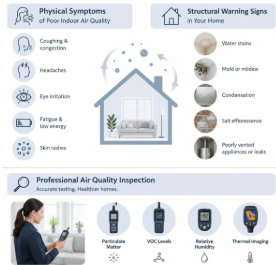
Our homes are complex environments, and sometimes, they send subtle signals that their indoor air quality (IAQ) is compromised. These signals can manifest as both physical symptoms in occupants and visible cues within the building itself. Understanding these warning signs is crucial for knowing when to seek a professional assessment.
Common physical symptoms often associated with poor IAQ are sometimes grouped under the term “sick building syndrome.” These can include persistent respiratory irritation, such as sneezing, congestion, coughing, and a runny nose. Beyond respiratory issues, occupants might experience headaches, blurry vision, eye irritation, difficulty concentrating, lethargy, nausea, vomiting, and even skin rashes. These symptoms often improve when leaving the affected environment and return upon re-entry.
Beyond how we feel, our homes can display structural warning signs. Evidence of water intrusion, such as water stains on ceilings or walls, condensation on windows, or even visible mold or mildew growth, are clear indicators of potential moisture problems that can severely impact IAQ. Salt efflorescence (white, powdery deposits on masonry) can also point to moisture wicking through building materials. Improperly vented combustion appliances, leaks, or pooling water are also critical visual cues.
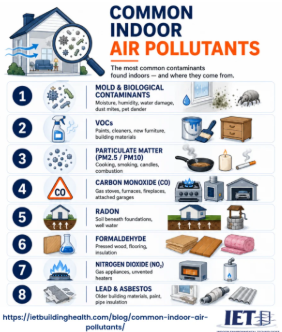
Other environmental triggers include chemical off-gassing from new furnishings or building materials, leading to elevated volatile organic compound (VOC) levels. Gas cooking emissions can significantly increase indoor nitrogen dioxide (NO2) concentrations, especially without adequate ventilation. Particulate accumulation from various sources, and issues with indoor relative humidity (either too high, promoting mold, or too low, causing discomfort), can all contribute to an unhealthy indoor environment.
Core Diagnostic Standards in Independent Air Quality Inspection Homes
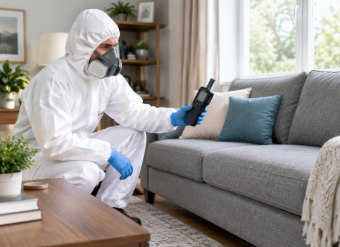
When it comes to assessing a home’s indoor air quality, a professional inspection goes far beyond simple observation. It involves a systematic approach using specialized tools and established protocols to accurately diagnose potential issues. This process often begins with a thorough consultation to understand the homeowner’s concerns, building history, and any observed symptoms.
A comprehensive assessment typically involves multi-point sampling, where air samples are collected from various locations within the home to identify pollutant concentrations. Inspectors may use thermal imaging to detect hidden moisture pockets or insulation deficiencies, and pressure differentials might be measured to understand airflow dynamics and potential pathways for outdoor pollutants or soil gases. Moisture mapping helps pinpoint the extent of water damage, while continuous monitoring devices can track parameters like temperature, humidity, and CO2 levels over time.
For a deeper dive into ensuring a healthy living space, an independent air quality inspection homes service can provide detailed insights into your property’s specific environmental conditions. These expert assessments are designed to identify issues such as chemical off-gassing, potential sub-slab depressurization needs for radon, and other hidden environmental concerns.
Basic Testing vs Comprehensive Independent Air Quality Inspection Homes Assessment
The range of air quality evaluations available can vary significantly, from basic DIY kits to extensive professional inspections. Understanding the difference is key to choosing the right level of assessment for your home.
Basic air quality testing often involves screening sensors or simple home kits that can provide a snapshot of common pollutants like VOCs, CO2, or particulate matter. While these can offer preliminary insights, they typically lack the precision, specificity, and comprehensive analysis of a professional assessment. For instance, a basic kit might detect “high VOCs” but won’t identify the specific chemical compounds or their sources.
A comprehensive inspection, on the other hand, employs advanced techniques and laboratory assays. This can include active spore trapping for mold identification, specific testing for formaldehyde, nitrogen dioxide, or other hazardous chemicals. Combustion appliance zones (CAZ) are meticulously checked for proper venting and potential backdrafting, often involving draft divergence tests and carbon monoxide safety checks. Radon testing, sewer gas intrusion detection, and even tracer gas decay tests to measure air exchange rates are part of a thorough assessment. Blower door diagnostics are used to identify air leakage pathways, crucial for understanding how outdoor pollutants enter or conditioned air escapes.
Here’s a comparison of what you might expect:
Feature Basic Spot-Testing (DIY/Screening) Comprehensive Multi-Parameter Inspection (Professional) Pollutant Detection General VOCs, CO2, PM2.5, temperature, humidity (real-time) Specific VOCs (e.g., formaldehyde, benzene), mold species, radon, CO, NO2, allergens, asbestos Methodology Electrochemical sensors, color-change indicators, simple monitors Lab-analyzed air/surface samples, active spore traps, specialized gas analyzers, blower door Accuracy/Specificity General indications, prone to false positives/negatives High accuracy, identifies specific compounds/species, quantitative measurements Scope Spot-checks, limited areas, immediate readings Whole-house assessment, source identification, ventilation analysis, building envelope review Reporting Simple digital display, basic app data Detailed report with lab results, recommendations, remediation plan, standards comparison Cost (General) Lower (e.g., $50-$300 for devices) Higher (e.g., $400-$1500+ depending on scope) Standards and Diagnostic Protocols in Independent Air Quality Inspection Homes
Professional air quality inspectors adhere to recognized industry standards and diagnostic protocols to ensure accurate and reliable assessments. These standards provide benchmarks for acceptable indoor air quality and ventilation performance.
Key standards include ASHRAE 62.2, which sets minimum ventilation rates and other measures to provide acceptable indoor air quality in low-rise residential buildings. The EPA Indoor airPLUS program also provides a comprehensive set of construction specifications for new homes, aiming to improve indoor air quality and energy efficiency. ANSI/RESNET/ICC Std. 380 outlines the national standard for home energy ratings, which includes airtightness testing crucial for IAQ.
For specific pollutants, inspectors often reference California’s Chronic Reference Exposure Levels (RELs) established by the Office of Environmental Health Hazard Assessment (OEHHA). For example, the California EPA Chronic REL for formaldehyde is 9 μg/m³. Studies in high-performance homes in California as recently as 2026 show that while median formaldehyde levels were lower than older homes (17.5 µg/m³), they still exceeded this REL in a significant number of cases. Similarly, nitrogen dioxide thresholds are important, especially in homes with gas cooking, where concentrations can be 1.7 times higher indoors than outdoors without proper ventilation.
Diagnostic protocols involve specific testing methods, such as airflow hood verification to measure the actual cubic feet per minute (CFM) of exhaust fans, ensuring they meet ASHRAE 62.2 requirements. Duct leakage testing helps ensure that ventilation systems are not losing conditioned air or drawing in pollutants from unconditioned spaces. These rigorous standards and methods ensure that an inspection provides a clear, actionable picture of your home’s environmental health.
Diagnosing Hidden Building Risks: Ventilation, Filtration, and Remediation
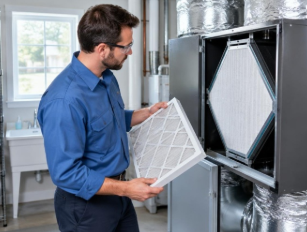
Many modern homes, especially those designed for high energy efficiency, are built with increased airtightness. While beneficial for energy savings, this can inadvertently trap indoor pollutants if not accompanied by robust mechanical ventilation. This creates a hidden risk: the “airtightness trap,” where a well-sealed envelope prevents natural air exchange, leading to pollutant buildup.
Effective moisture management is paramount. Capillary breaks, vapor barriers, and proper crawlspace encapsulation prevent moisture from entering the building envelope from the ground or foundation, reducing the risk of mold growth. Proper grading and drainage around the foundation, along with functional sump pumps, are critical to managing water intrusion. Duct sealing is also vital, as leaky ducts can draw in moisture, dust, and pollutants from attics, crawlspaces, or wall cavities, distributing them throughout the home.
Evaluating Mechanical Ventilation (HRV/ERV) and Exhaust Deficiencies
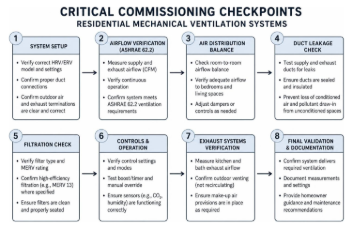
Mechanical ventilation systems, such as Energy Recovery Ventilators (ERVs) and Heat Recovery Ventilators (HRVs), are designed to provide controlled fresh air while minimizing energy loss. However, these systems are only effective if properly installed, commissioned, and maintained. Common faults found in HRV/ERV systems include incorrect duct connections, recirculation due to mis-wired components, clogged outdoor air intakes, and improper control settings. These issues can drastically reduce their effectiveness, leading to inadequate air exchange.
Kitchen and bathroom exhaust systems are also critical for removing localized pollutants. Range hoods, when properly vented outdoors and used consistently, significantly reduce cooking-related pollutants like NO2 and ultrafine particles. However, many homes still have recirculating range hoods or occupants fail to use them effectively. Similarly, bathroom exhaust fans must meet specific airflow rates (e.g., ASHRAE 62.2-2013 requirements) to adequately remove moisture and odors. Studies indicate that a significant percentage of these fans in deep energy retrofit homes fail to meet these airflow requirements, leading to moisture buildup and potential mold issues. Make-up air dampers are often necessary in airtight homes to prevent negative pressure when high-CFM exhaust fans are operating.
Here are critical commissioning checkpoints for residential mechanical ventilation systems:
High-Performance Filtration and Safe Energy-Efficiency Retrofits
Particle filtration plays a crucial role in reducing indoor particle concentrations. While a MERV 8 filter is often considered a baseline for residential HVAC systems, upgrading to MERV 13 can significantly enhance indoor air quality by capturing smaller, more harmful particles, including bacteria, viruses, and fine dust. Homes with enhanced particle filtration (MERV 7 to MERV 14) have been shown to have particle count levels up to 57% lower than homes without any filtration, according to 2026 data.
Energy-efficiency upgrades, while beneficial, must be undertaken with careful consideration for indoor air quality. For instance, air sealing an older home without simultaneously upgrading ventilation can lead to ‘sick building syndrome’ by trapping existing pollutants. Precautions must be taken, especially in older homes, to avoid disturbing hazardous materials like asbestos or lead during renovations. If a home was built between the 1930s and 1970s, it has a higher likelihood of containing asbestos-containing materials (ACMs). The EPA provides extensive guidelines for single-family home renovations, emphasizing health-first assessments and recommending professional abatement for suspected ACMs.
The choice of building materials also impacts IAQ. Using low-emitting materials, such as certified low-formaldehyde pressed wood products (meeting California’s CARB Phase II standards) and low-VOC paints and finishes, can dramatically reduce chemical off-gassing. For example, median formaldehyde levels in high-performance green homes using such materials were approximately 50% lower than in conventional homes. Converting from gas cooking to induction cooktops can also dramatically lower indoor NO2 and ultrafine particle emissions, contributing to a healthier kitchen environment.
After any significant energy retrofit, perform post-retrofit ventilation balancing to ensure adequate fresh air exchange. Long-term indoor environmental maintenance, including regular filter changes, duct cleaning, and proper use of exhaust fans, is vital to sustain a healthy indoor environment for years to come.