

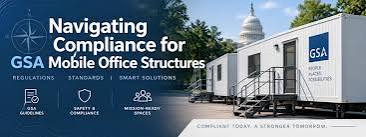
Government agencies need flexible workspaces that can adapt to changing missions without interrupting ongoing operations. A GSA mobile office provides modular space for administrative work, training, emergency response, and field operations. Some configurations go beyond traditional office setups, offering specialized layouts and adaptable features to meet evolving operational needs. Here is more information about GSA mobile office innovations:
Multi-Functional Workspaces
Government operations often involve multiple activities within the same facility, and mobile layouts organize these functions into separate but connected spaces. Conference rooms provide dedicated space for agency meetings, while training areas support instruction without displacing administrative workstations. Restrooms and break areas serve staff who remain at the facility throughout the workday.
Each floor plan configuration reflects the space required for certain activities. An administrative unit might include private offices, a shared conference room, and a reception area, while a training facility uses larger rooms for instruction and equipment. This approach places each function in a space designed for its specific use.
A project office can place individual workstations alongside a dedicated coordination room, so staff have separate areas for focused work and team discussions. This arrangement reduces conflicts between activities. It also gives each function the space, equipment, and level of privacy it requires.
Modular and Expandable Designs
GSA mobile offices use modular construction to add workspace without replacing an existing facility, and connected units form larger configurations with offices, meeting rooms, and shared work areas. Agencies add units when a program requires additional rooms, while the modular layout keeps those spaces within one coordinated facility. Open configurations organize shared administrative functions and equipment in common work areas, while enclosed rooms provide space for activities that require privacy or concentration. A field operations facility can combine individual offices with a conference room for staff coordination and briefings. When an assignment changes, the units are disconnected and deployed to another location, which supports reuse across different projects and operating sites.
Technology-Enabled Workspaces
A GSA mobile office incorporates technology that supports agency operations in temporary and remote settings. Their layouts accommodate digital equipment and provide the infrastructure required for connected work. Secure power access supports computers and other equipment, while communications infrastructure connects personnel to internal agency networks. HVAC systems maintain controlled indoor conditions for staff and technology during regular operations. Here are a few technologies that support connected government workspaces:
- Wireless routers: Connect authorized devices to secure networks.
- Video conferencing systems: Support virtual meetings and remote collaboration.
- Power management systems: Distribute electricity across workstations.
The selected floor plan also affects how equipment and personnel use the available space. A workspace designed for remote collaboration requires appropriate placement of screens, workstations, and communication equipment. The layout provides space for equipment access and cable management while maintaining clear paths for normal movement.
Relocatable Field Offices
Mobile offices provide temporary administrative space near infrastructure projects, construction sites, and other government activities. Agencies use these spaces when administrative personnel need to work near an active project instead of operating from a permanent facility farther away. Field offices also provide designated areas for coordination when multiple teams work at the same location, and their configuration varies according to the operational requirements. During disaster response, relocatable offices provide space for administrative and coordination activities. When a response operation shifts to another location, the office setup can be relocated as required.
Customizable Government Floor Plans
Government agencies may use modular office configurations as a starting point and select the features that fit a particular project. Some arrangements emphasize individual offices, while others devote more space to shared work areas, training, or meetings. The level of customization depends on the intended use of the facility and the number and type of spaces required. Common approaches include:
- Standard configurations: Use a predefined arrangement as the basis for an office setup.
- Customized configurations: Modify the arrangement to reflect specific space requirements.
- Mixed-use configurations: Combine individual offices with shared spaces for meetings, training, or other activities.
- Variable configurations: Use different combinations of spaces within the same modular office system.
Learn More About GSA Mobile Offices
A modular facility should have a layout that fits the agency’s work and how the facility will be used. Space needs differ among administrative offices, training facilities, field offices, and emergency response sites. Planning at the start of a project lets you address the facility’s location and potential future changes. Contact a qualified modular building provider to discuss a GSA mobile office configuration suited to your agency’s operational requirements.