

The top of OrcaRouter‘s cyber price ladder is the Kimi K3.1 Pro abliterated pricing card: $4.00 in and $20.00 out, blended $8.00 at a 3:1 mix [OURS].
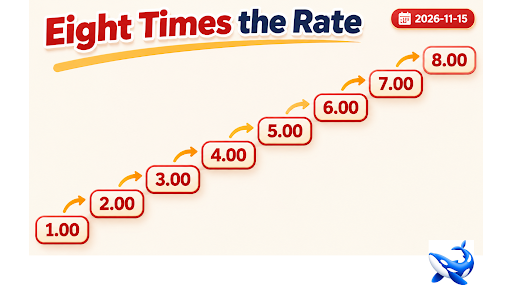
Six of the eleven cards on the tier sit at exactly $1.00 blended. Kimi is eight times the floor and twice the card above it.
The interesting question is not whether that is expensive. It is whether the eight dollars buys something the one dollar does not, and the answer is narrower and more specific than the price suggests.
The full ladder
| card | in | out | blended | quality | blended per quality point |
| DeepSeek V4.1 Flash | 0.80 | 1.60 | 1.00 | 8 | 0.125 |
| Qwen3.8 Flash Next | 0.80 | 1.60 | 1.00 | 8 | 0.125 |
| GLM 5.3 Flash | 0.80 | 1.60 | 1.00 | 8 | 0.125 |
| MiMo V2.6 Flash | 0.80 | 1.60 | 1.00 | 8 | 0.125 |
| MiniMax M3.1 Flash | 0.80 | 1.60 | 1.00 | 8 | 0.125 |
| Hy4 | 0.80 | 1.60 | 1.00 | 8 | 0.125 |
| GLM 5.3 | 3.00 | 5.00 | 3.50 | 9 | 0.389 |
| Zero 1.0 | 3.00 | 7.50 | 4.13 | 9 | 0.458 |
| Zero 1.5 | 3.00 | 7.50 | 4.13 | 9 | 0.458 |
| Ultra 1.0 | 5.00 | 10.00 | 6.25 | 9 | 0.694 |
| Kimi K3.1 Pro | 4.00 | 20.00 | 8.00 | 9 | 0.889 |
[OURS], prices and quality scores read 2026-11-15; blended and per-point arithmetic our own.
Read the last column and Kimi is the most expensive card per unit of headline quality on the shelf — 7.1× the flash tier and 2.3× GLM 5.3. The column is a trap, for reasons the rest of this piece is about.
Why quality-per-dollar is the wrong metric here
The quality score is a 0–9 judgement, and five cards share the top value. It has no resolution to distinguish a card that is marginally better from one that is much better, so a ratio against it produces numbers that look precise and are not.
More importantly, it is not the axis the price is on. Kimi’s premium does not buy a higher quality score; every nine is a nine. It buys three specific rows.
A 943,718-token output ceiling. Seven times the 131,072 that five cards share. That is a capability no cheaper card has at any price.
A 90% ceiling-to-window ratio. The only card where input and output can both be large.
A 1.99-second median at the top of the shelf. Faster than GLM 5.3’s 3.26 seconds and Ultra’s 2.90, slower than Zero 1.0’s 1.94.
So the eight dollars buys headroom and a median. If your work needs neither, the flash tier at $1.00 does the job at an eighth of the price and the comparison is over.
The output rate is where the bill lands
A blended rate hides the mix, and Kimi’s mix is unusual.
Its output rate is $20.00 — twelve and a half times the $1.60 the six flash cards charge, and the highest on the tier. Its input rate is $4.00, cheaper than Ultra’s $5.00.
That means the bill is dominated by what you write, not what you read. A 100,000-token input and a 100,000-token output costs $2.40, of which $2.00 is output [OURS, our arithmetic]. A read-heavy job — a million input tokens, 5,000 out — costs $4.10, and 98% of that is input.
For a card sold on its output ceiling, that is the right shape: the expensive resource is the one you only have a lot of when you need the ceiling.
Cache economics, which run the other way
Kimi’s cache read is $0.35 per million, an 8.75% share of its input rate — the lowest share on the tier, behind GLM 5.3’s 10.00% and the flash tier’s 18.75% [OURS].
Its base checkpoint, `kimi-k3.1-pro`, sits at a 10.00% share. So the abliterated card caches *proportionally worse* than the checkpoint it was built from, which is unusual — most of the tier holds the share flat.
The practical effect: at a 90% hit rate, Kimi’s effective input is $0.715 per million against the base’s $0.38 [OURS, our arithmetic]. Caching helps Kimi less than it helps its own base, and a team designing a long static prefix should know that before assuming the pattern transfers.
In absolute terms $0.35 is still a large saving against $4.00 — 91% off a cache hit. The share is low; the discount is not.
What the price is not
Not a rate for a bigger model. The card is the same size as its base on both axes except for the ceiling, which the base shares at 943,718 [OURS]. The multiple is the served product over the checkpoint: exactly 2.00× on input and 2.00× on output.
Not a premium for access alone. Access gates exist on all eleven cards and cost nothing extra on this one.
Not a mistake. A card that generates at 62.0 tokens a second for four hours is holding a server allocation for four hours, and $20.00 per million is what that costs.
What it is: a capability price. The card is expensive because the job it does is expensive to serve, not because the model is better.
When the eight dollars pays
Three cases, and each has a number attached.
The output exceeds 131,072 tokens. No cheaper card can produce the response. Whatever Kimi costs, the alternative is a chunking loop that composes the document out of pieces, and the loop has its own cost in engineering and in coherence.
The document is read and rewritten whole. A full-manual translation, a whole-service review. The 90% ratio is the capability and no other card has it.
The alternative is a person. A 943,718-token output at $18.87 is a document that would take a week of human time. At that comparison the price is not the constraint.
Three cases where it does not pay, and they are more common.
Output under 20,000 tokens per call. A flash card at $1.00 blended does the same job; the ceiling is decoration.
Interactive use. A 1.99-second median is good and a 4.2-hour maximum response is not a conversation. Kimi is a batch card.
High-volume short responses. A thousand 2,000-token responses a month costs $40 in output. On a flash card it costs $3.20. The twelve-fold difference is the whole reason the tier has a floor.
How to decide in one calculation
Take your p99 single-response length in tokens and multiply by $20.00 per million. That is the most one call can cost you.
If the result is under a cent, Kimi’s ceiling is not your constraint and you should be looking at the flash tier on serving rows.
If it is a dollar or more, you are in the regime where the ceiling is the product, and the comparison to make is against the cost of the chunking loop rather than against another card’s rate.
The threshold is around 50,000 output tokens per call, which is where the flash cards’ 131,072 ceiling stops being comfortable and Kimi’s 943,718 starts being the point.
The short version
$4.00 in and $20.00 out is $8.00 blended, eight times the tier’s floor and exactly 2.00× the base checkpoint on both axes.
It buys a 943,718-token output ceiling, a 90% ceiling-to-window ratio and a 1.99-second median — three rows no cheaper card has, and nothing on the quality axis.
Two warnings before a purchase. The output rate dominates the bill, so size it from your longest response rather than your average. And the cache share is the lowest on the tier at 8.75%, so a prefix design that pays on the base pays less here.
Sourcing note: prices, cache-read rates, output ceilings, context windows, quality scores, latency, throughput, error rates and traffic are read from the eleven cards’ public model data on 2026-11-15, with seven-day windows ending that day [OURS]. Blended, per-point and per-call arithmetic is our own at a 3:1 input-to-output mix. The card publishes no benchmark rows.