

An older house rarely announces its problems directly. It communicates through small inconveniences that get absorbed into daily life until they stop registering as problems at all. The tap that runs brown for a few seconds every morning, the shower that never quite delivers, the faucet that has been on the repair list for two years. Homeowners adapt, and the adaptation hides the pattern. Anything built between the 1920s and the 1970s frequently still carries its original supply lines, and materials installed that long ago were never expected to last this far. Reading the signals correctly is what separates a planned upgrade from an emergency at two in the morning.
When Replacement Beats Another Round of Repairs
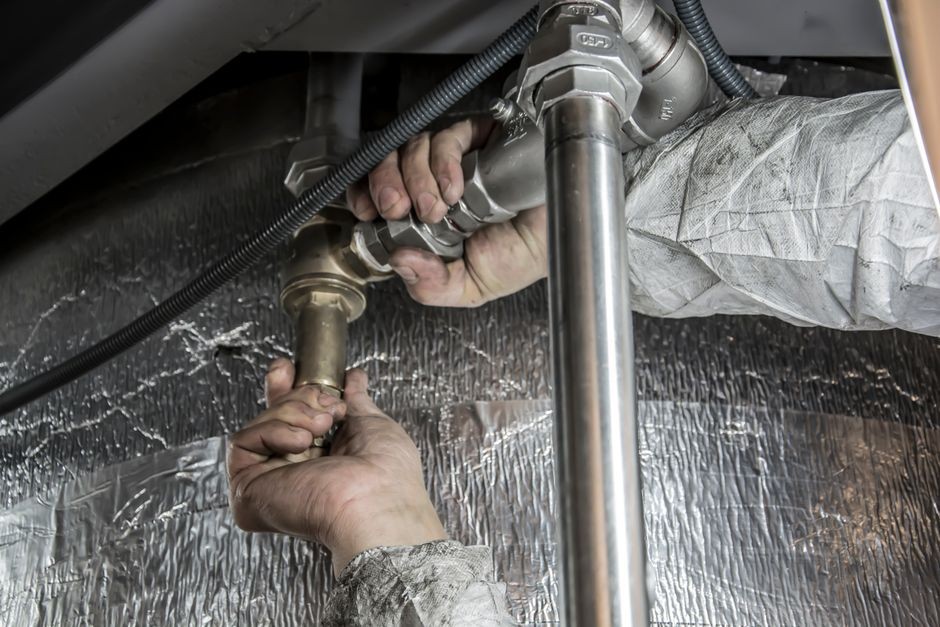
There comes a point where fixing individual pipes stops making financial sense. Multiple leaks in separate locations, pressure dropping across the whole house, and discolored water at several fixtures all point to deterioration throughout the system rather than a fault in one spot. Continuing to patch a failing network simply means paying repeatedly for the same underlying problem while the risk of serious water damage grows. Homeowners in that position should hire a company that offers professional home repiping services to replace the failing pipes rather than keep chasing them. Most residential projects finish within three to seven days depending on the size of the property.
What the Original Materials Tell You
The age of a house narrows down what is likely behind its walls. Properties built before 1960 commonly used galvanized steel, which corrodes from the inside until rust restricts flow and gives water a brown tint. That material typically reaches the end of its usable life somewhere between forty and seventy years.
Homes built during the 1970s and 1980s may contain polybutylene, a gray plastic piping that reacts poorly to chlorine and becomes brittle enough to crack. Insurers treat it as high risk for good reason. The oldest properties can still contain lead pipes or lead solder, which leaches into drinking water and presents a health concern rather than merely a plumbing one. Even copper eventually gives way, developing pinhole leaks after forty years or more, and hard water accelerates the process.
Water That Does Not Look or Taste Right
Discoloration is one of the clearest signals a system is deteriorating. Brown, rust colored, or black water indicates serious corrosion happening inside the lines, and when it appears at more than one fixture, the problem is not isolated to a single run of pipe.
Taste and smell carry information too. A metallic taste suggests metal corroding into the supply. Musty odors can indicate bacterial growth inside deteriorated lines. Neither should be treated as a quirk of an old house that everyone eventually stops noticing. Clear water with no taste is what a functioning system produces, and anything else is worth investigating.
Pressure That Has Quietly Declined
Weak flow across an entire property usually means the interior diameter of the pipes has narrowed. Corrosion and mineral deposits accumulate along the walls of the line over decades, and because the change happens gradually, households adjust without registering it.
The clue is usually comparative. A shower that feels weak at home and normal elsewhere, or a bathtub that takes noticeably longer to fill than it once did, points to restriction rather than the fixture. Replacing a showerhead or cleaning an aerator makes no difference when the limitation sits upstream in the supply line.
Repairs That Keep Coming
A single leak is an isolated event. Two or three in different locations within a short span indicates that the system is failing broadly rather than at one weak point. Once a plumber is visiting regularly for unrelated pipe issues, the pattern has become the diagnosis.
The economics shift at that stage. Individual repairs seem reasonable in isolation, and homeowners rarely add them up across several years. Doing that arithmetic often reveals that continued patching has cost more than a comprehensive solution would have, with the failures still ongoing.
What Exposed Pipes Reveal
Basements, crawl spaces, and utility areas offer a free look at conditions elsewhere in the house. Flaking, pitting, green or white deposits at joints, and general discoloration on visible runs indicate advanced deterioration, and what shows on the outside is typically better than what has happened inside.
Checking these areas periodically is worth the few minutes it takes. Damp spots, mineral trails running down a pipe, or corrosion concentrated around a fitting all mark places where failure is likely to happen first. Photographing them makes it possible to see how quickly conditions are changing over a year or two.
Choosing Between Modern Materials
Two options dominate current work. PEX is flexible, which allows it to route through existing wall cavities with fewer access holes cut, and it resists corrosion and scale buildup. It also tolerates freezing far better than rigid materials and rarely bursts, and modern systems typically carry twenty-five-year warranties.
Copper retains a strong reputation and lasts fifty years or more, though hard water gradually corrodes it. For drain lines, PVC has become the standard, since it resists corrosion indefinitely and its smooth interior resists the clogs that plague older cast iron. The right choice depends partly on local water conditions and partly on what a homeowner prefers, and a good contractor will explain both rather than defaulting to one.
What the Work Actually Involves
The prospect of replacing every pipe in a house sounds more disruptive than it usually is. The process begins with an assessment of the existing system, followed by a written proposal covering the scope. Access openings get cut where needed, old pipes come out, new lines go in room by room, and everything gets pressure tested before walls are closed.
Most households stay in place throughout. Water shuts off during working hours and is generally restored each evening, and quality wall repair including patching, texturing, and matching paint leaves the access points close to invisible. Dust and noise are unavoidable, though most families manage without leaving.
The Case for Acting Early
Waiting until pipes fail means dealing with the consequences on the worst possible schedule, often during a freeze or while a house is empty. Planned work happens on a timeline that suits the household, with materials chosen deliberately and a budget prepared in advance.
There is a resale argument as well. Inspections reveal plumbing age to buyers, and a house needing replacement either loses buyers outright or invites price negotiation. Documented recent work removes that objection and supports a stronger asking price, while a properly repiped system continues delivering reliable service for fifty years or more.