

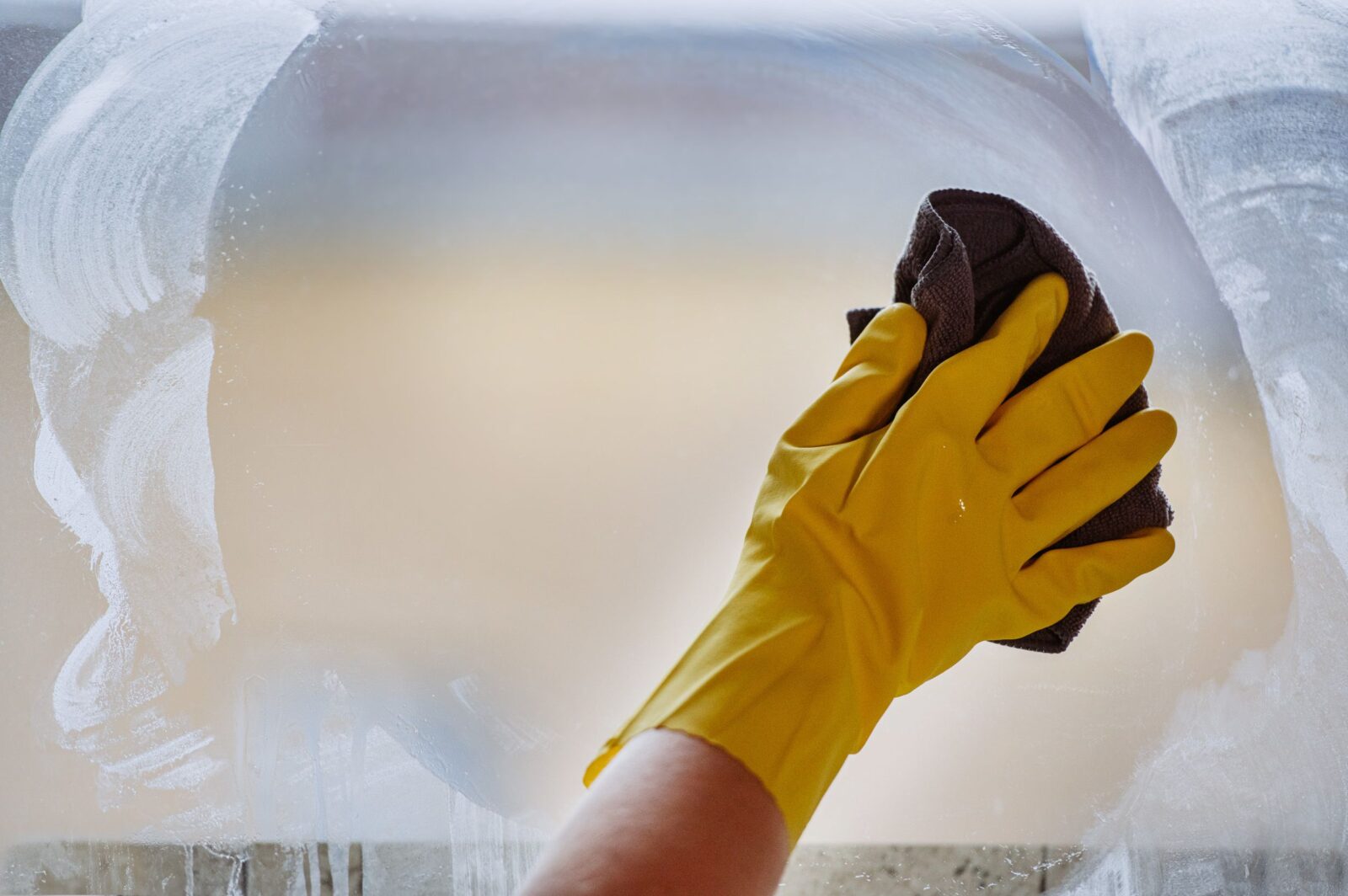
Sun, sprinklers, and dust can leave exterior windows looking spotted or hazy even after you wipe them down. Before reaching for a harsh chemical or a razor, it helps to identify exactly what is on the glass. Some marks are removable mineral deposits or debris; others are permanent etching that cleaning cannot fix. This article explains how to tell the difference, how to attempt removal safely in a sensible sequence, and what to change outdoors so the problem does not return. The goal is clear: protect your glass while restoring clarity whenever possible.
What Different Marks on Glass Usually Mean
Not all spots are the same. Circular rings, crescent arcs, or a chalky film that feels rough under your fingertips usually point to hard-water scale from calcium and magnesium in sprinkler overspray. A rainbow-like sheen or faint milky haze after construction may suggest silica or cement residue from stucco or mortar. Black or gray smudging around the window edge is often “screen burn,” a powdery oxidation transferred from aluminum screens to the glass. Local listings such as Glide Window Cleaning of Mesa can help you find a window cleaner familiar with these issues if a professional assessment is preferred.
Scattered specks that catch the light and resist normal washing may be paint, stain, or silicone overspray. Those can often be removed with careful use of a razor scraper on non-tempered panes, whereas scale responds better to an acid cleaner. If you notice smooth areas that look wet even when dry, especially on panes facing sprinklers under strong sun, that can be etching: minerals baked into the surface or microscopic damage that cleaning will not reverse. Recognizing these patterns helps set realistic expectations before you start.
Southwest-Specific Causes: Sprinklers, Stucco, and Sun
In arid climates, irrigation does much of the spotting. Overspray from rotors or pop-up heads can hit glass daily, leaving minerals that flash-dry in minutes. When stucco or concrete is washed down, runoff carries silica that can bond to hot glass. Monsoon bursts and dust leave silt on sills; later watering splashes that grit up the pane. The intense sun accelerates the reaction between alkaline deposits and hot glass, making light spotting a weekly maintenance task and, if ignored, a source of permanent etching.
Simple Field Tests Before You Reach for Strong Chemicals
Start with a standard clean to remove loose soil so you can see what remains. Use a bucket with a few drops of dish soap, a scrubber or microfiber pad, and a squeegee. If marks survive, do a quick vinegar test: soak a cloth with white vinegar (a mild acid), press it on a small corner for a minute, then scrub with the cloth. If the spot lightens, you likely have mineral scale, which responds to acidic treatments. If nothing changes, you might be looking at etching or non-mineral contamination.
For specks, a plastic scraper or, on non-tempered glass, a sharp razor held at a low angle can dislodge paint. Always keep the surface wet with soapy water to avoid scratching. Never dry-scrub with 0000 steel wool; instead, if you use wool, choose 0000 bronze wool or super-fine steel wool lubricated with soapy water. Avoid razors on tempered or heat-strengthened glass because of a higher scratch risk, and skip abrasive pads on low-e coatings or tinted films. When in doubt about the glass type, do not scrape.
A Safe, Escalating Removal Sequence
Work from gentle to stronger. After the initial wash, apply a dedicated mineral-removal product appropriate for glass or use a mild acid like diluted sulfamic or oxalic acid following the label. Keep the solution off frames and landscaping; tape edges, lay towels on sills, and protect plants. Let the solution dwell briefly without drying, agitate with a white non-scratch pad or bronze wool lubricated with the solution, then rinse thoroughly and squeegee dry. Neutralize acidic residue on frames and nearby surfaces with a mild baking soda rinse, and rinse again with clean water.
If light deposits persist, repeat rather than jumping to a harsher chemical. The trade-off is time versus risk: stronger acids and aggressive abrasives may work faster but can stain anodized aluminum, damage sealants, or haze glass if misused. Avoid hydrofluoric-based restorers unless used by an expert; they can etch glass and harm skin and lungs. For panes already etched, machine polishing can improve clarity but may create optical distortion. At that point, many owners opt to live with light etching, relocate sprinklers, and maintain more frequently to prevent progression.
Keeping Scale From Coming Back
Two scenarios illustrate prevention. On a patio door hit by lawn rotors, redirect the heads so spray stops 12–18 inches short of the glass, swap to drip irrigation near beds, and add splash blocks or extensions on downspouts so runoff does not bounce onto windows. Clean the glass in the early morning so cleaner does not flash-dry, and consider a hydrophobic glass protectant after cleaning to slow mineral bonding. On a second-story bedroom above a stucco walkway, ensure weep holes are clear so dirty water does not pool in tracks, and rinse walls below windows after any masonry work.
For routine upkeep, a pure water-fed pole system that uses deionized water leaves fewer spots because it dries without minerals. Homeowners can approximate that by rinsing with distilled water after cleaning or by thoroughly squeegeeing and toweling edges. Screens deserve attention too: brush oxidized frames, wash screens with a mild detergent, and let them dry fully before reinstalling so gray residue does not print back onto the glass. Most importantly, set a seasonal schedule; letting deposits bake in summer sun makes each future cleaning harder and raises the chance of permanent etching.
Hard-water marks are common, but they are not all the same. Identify what you are seeing, test gently, and then escalate with purpose: controlled dwell time, proper agitation, thorough rinsing, and neutralization where needed. Protect frames and landscaping, and avoid scraping coated or tempered glass. If etching has already set in, focus on preventing new overspray and keeping panes cooler and cleaner so the condition does not worsen. A measured approach preserves clarity without risking unnecessary damage and keeps exterior windows in better shape through the hottest months.