

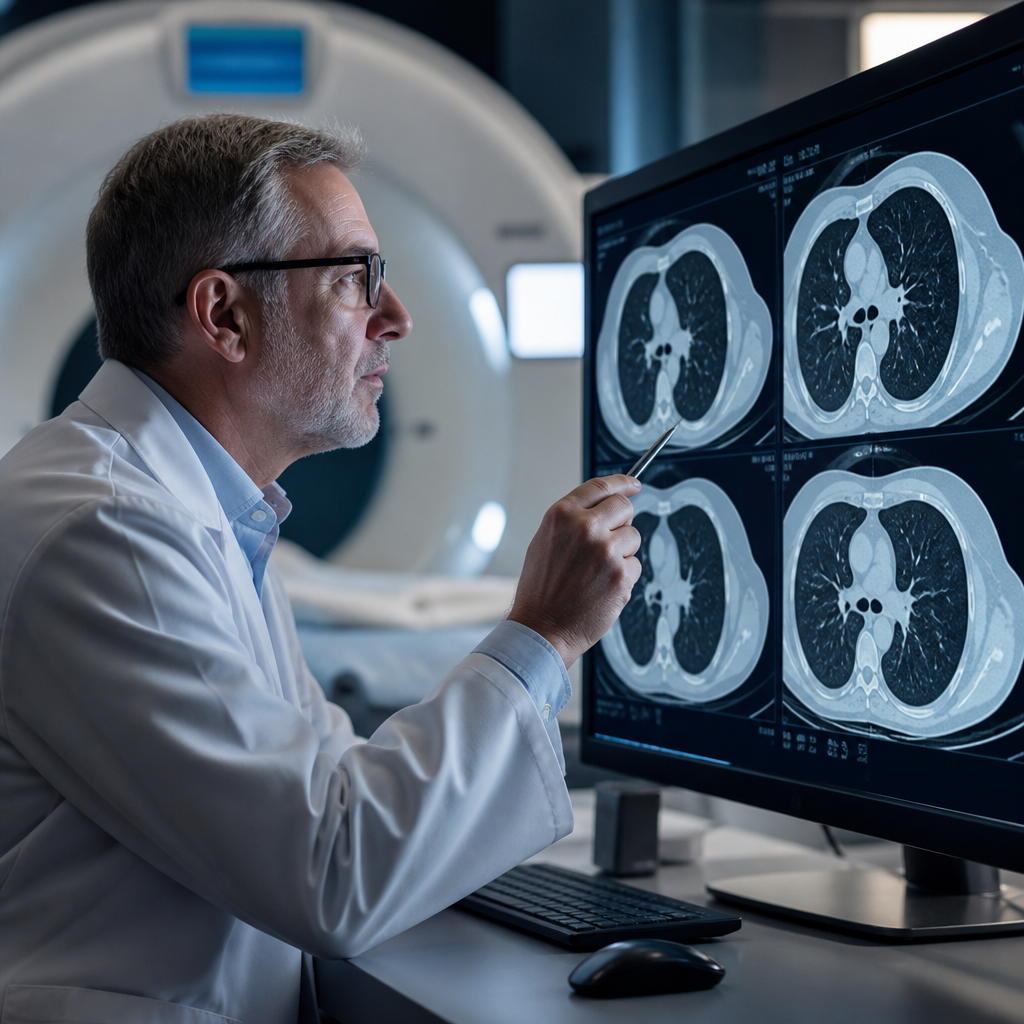
Lung cancer remains the leading cause of cancer deaths worldwide, yet many cases are diagnosed only after symptoms appear—often when treatment options become more limited. The good news is that low-dose CT screening has changed the trajectory for thousands of high-risk patients, detecting tumors at stages when they’re still highly treatable. For anyone with a significant smoking history or occupational exposure to carcinogens, understanding when and how to pursue screening could mean the difference between early intervention and advanced disease.
Who Should Consider Lung Cancer Screening
Screening guidelines have evolved significantly over the past decade as researchers have refined their understanding of who benefits most. Current recommendations focus on adults aged 50 to 80 who have a 20 pack-year smoking history—that’s one pack per day for 20 years, or two packs daily for 10 years—and either currently smoke or have quit within the past 15 years. People who work in industries with heavy asbestos, radon, or silica exposure may also qualify even if their smoking history is lighter.
The screening window closes once you’ve been smoke-free for more than 15 years or develop health problems that would make cancer treatment unrealistic. It’s not a one-size-fits-all decision. Your personal risk profile, family history, and overall health all factor into whether annual screening makes sense. A conversation with your primary care physician or a pulmonary specialist helps clarify where you fall on the risk spectrum.
What the Screening Process Involves
Low-dose computed tomography uses significantly less radiation than a standard diagnostic CT scan—roughly the equivalent of six months of natural background radiation. The scan itself takes less than 30 seconds and requires no injections, fasting, or sedation. You simply lie on a table while the machine captures detailed cross-sectional images of your lungs.
Radiologists then review these images for nodules, masses, or other abnormalities. Most findings turn out to be benign—scar tissue from old infections, harmless calcium deposits, or inflammation. Small nodules under six millimeters are typically monitored with follow-up scans rather than biopsied immediately. Larger or irregularly shaped nodules may warrant further investigation through additional imaging, PET scans, or tissue sampling.
The psychological aspect of screening deserves attention. False positives occur in roughly 10 to 12 percent of screenings, leading to additional tests that ultimately reveal no cancer. This uncertainty creates anxiety for some patients, though studies show most people prefer knowing their status even when follow-up is needed. Discussing your comfort level with ambiguity beforehand helps set realistic expectations.
The Evidence Behind Early Detection
The National Lung Screening Trial, which followed more than 53,000 participants, demonstrated that annual low-dose CT screening reduced lung cancer mortality by 20 percent compared to chest X-rays. More recent data suggests the benefit may be even greater when screening continues consistently over multiple years. Stage I lung cancers detected through screening have five-year survival rates exceeding 70 percent, compared to under 10 percent for stage IV disease.
These numbers reflect real people whose cancers were caught early enough for curative surgery or definitive radiation therapy. Cancer survivors who credit early detection often describe minimal symptoms before their diagnosis—a persistent cough they attributed to smoking, or mild chest discomfort they dismissed as aging. Screening provides a safety net for those whose bodies haven’t yet sent clear warning signals.
Accessing Specialized Pulmonary and Oncology Care
When screening reveals a concerning finding, the next step involves specialists who can accurately diagnose and stage any disease present. This often begins with pulmonologists who have expertise in advanced diagnostic procedures like bronchoscopy, endobronchial ultrasound, and navigational bronchoscopy for hard-to-reach nodules. In regions with comprehensive cancer centers, these specialists work alongside medical oncologists, radiation oncologists, and thoracic surgeons in multidisciplinary tumor boards where each case receives collaborative review. For patients in the UAE seeking this integrated approach, a Pulmonologist in Abu Dhabi at a facility with a dedicated cancer institute can coordinate the full spectrum of diagnostic testing, treatment planning, and follow-up care within a single healthcare system, which often streamlines what can otherwise be a fragmented process during an already stressful time.
Beyond Screening: Risk Reduction Strategies
Screening works best as part of a broader lung health strategy. Smoking cessation remains the most powerful intervention—lung cancer risk drops by 50 percent within five years of quitting, and continues declining with each smoke-free year. Nicotine replacement therapy, prescription medications like varenicline or bupropion, and behavioral counseling all improve quit rates substantially over willpower alone.
Environmental factors also matter. Testing homes for radon, which causes up to 20,000 lung cancer deaths annually, takes minimal effort and provides actionable information. Workers in high-risk industries should use proper respiratory protection and follow workplace safety protocols consistently. Even secondhand smoke exposure carries measurable risk, making smoke-free environments important for everyone, not just active smokers.
Diet and exercise influence outcomes too, though less dramatically than smoking cessation. Diets rich in fruits, vegetables, and whole grains correlate with lower cancer rates across multiple types. Regular physical activity improves lung function, supports immune health, and enhances overall resilience—factors that matter both for prevention and for tolerating treatment if cancer does develop.
Navigating the Healthcare System During Uncertain Times
Recent global health disruptions have complicated cancer screening for millions of patients. Delays in routine care, fear of healthcare facility exposure, and resource allocation challenges have all contributed to later-stage diagnoses in some populations. Organizations like the European Society for Medical Oncology have issued guidance on maintaining essential cancer services during public health emergencies, emphasizing that screening and diagnostic delays carry their own risks that must be weighed against immediate infection concerns.
For patients eligible for lung cancer screening, the calculation generally favors proceeding. Facilities have implemented enhanced safety protocols, and the potential benefit of catching cancer early typically outweighs the manageable risks of a brief medical visit. Telehealth consultations can handle the initial risk assessment and follow-up discussions for stable nodules, reducing in-person visits to only those requiring physical examination or procedures.
What Happens After a Positive Screen
A suspicious finding doesn’t mean cancer—it means more information is needed. The diagnostic pathway depends on nodule characteristics. Small, smooth nodules might simply be rescanned in three to six months to check for growth. Larger or irregular nodules may proceed directly to PET scanning, which shows metabolic activity, or to biopsy via bronchoscopy, needle aspiration, or surgical wedge resection.
If cancer is confirmed, staging determines the extent of disease spread and guides treatment selection. Early-stage cancers confined to the lung may be curable with surgery alone or with radiation therapy for patients who can’t tolerate surgery. More advanced disease might require chemotherapy, targeted therapy based on genetic testing of the tumor, or immunotherapy that helps the immune system recognize cancer cells.
Treatment advances have expanded options considerably. Minimally invasive surgical techniques reduce recovery time. Stereotactic body radiation therapy delivers precise, high-dose treatment in just a few sessions. Molecular testing identifies specific mutations that respond to oral targeted therapies with fewer side effects than traditional chemotherapy. Immunotherapy has transformed outcomes for some advanced lung cancers, turning what would have been months of survival into years of disease control.
Taking the First Step
If you meet screening criteria, initiating the conversation with your doctor is straightforward. Come prepared with your smoking history—years smoked, average packs per day, and quit date if applicable. Mention occupational exposures and family history of lung cancer. Ask whether your health system has a dedicated lung screening program, which typically includes shared decision-making consultations, streamlined scheduling, and coordinated follow-up for positive findings.
Insurance coverage varies by region and plan, but many countries and private insurers now cover annual screening for eligible patients with no out-of-pocket cost. Verify your specific coverage beforehand to avoid surprises. Some programs offer smoking cessation support as part of the screening process, recognizing that quitting remains the single most effective intervention.
Lung cancer screening represents one of the clearest examples of prevention-focused medicine making a measurable difference in mortality. For those who meet the criteria, annual screening offers a reasonable approach to catching disease at its most treatable stage. Combined with smoking cessation and attention to other risk factors, it’s a strategy grounded in solid evidence rather than wishful thinking—and that’s precisely the kind of approach that saves lives.