

Why Efficient Heat Pumps Outperform Traditional Systems in Humid Subtropical Zones
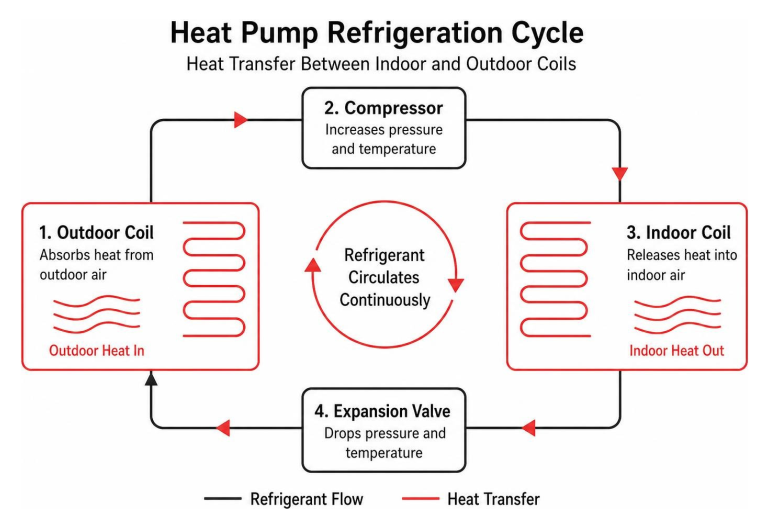
The fundamental advantage of a heat pump in a climate like ours is its ability to adapt. Traditional HVAC systems often rely on a binary approach: a furnace burns fuel to create heat, and an air conditioner uses a separate cycle to remove it. In contrast, a heat pump uses a refrigeration cycle to transfer heat. Because it doesn’t “create” heat through combustion, it avoids the energy losses associated with venting exhaust gases.
In humid subtropical zones, we experience a “Goldilocks” scenario for heat pumps. During the winter months, when temperatures typically hover in the 40–60°F range, these systems operate at their peak efficiency. They maintain a high Coefficient of Performance (COP), often between 2.5 and 3.5. This means for every unit of electricity consumed, the system moves 2.5 to 3.5 units of heat into your home. Because the winters are mild, the heat pump rarely struggles to find enough warmth in the outdoor air to keep your living space comfortable, making efficient heat pumps a powerhouse of year-round energy conservation.
How Efficient Heat Pumps Manage Latent Heat and Humidity
Humidity is the silent killer of comfort in the South. When indoor humidity rises above 60%, even a 75°F room can feel oppressive. Traditional systems often “short-cycle”—they blast cold air for a few minutes, drop the temperature, and shut off before the air has had a chance to pass over the cooling coil long enough to wring out the moisture.
Modern heat pumps, particularly those equipped with variable-speed compressors and inverter technology, solve this by running longer, slower cycles. Instead of surging to full power, they modulate their output to match the exact cooling load of the home. By running continuously at a lower capacity, the indoor coil stays colder for longer, acting as a constant dehumidifier. This extended runtime is the secret to maintaining a crisp, dry indoor environment without the uncomfortable temperature swings associated with older, single-stage equipment.
Heat Transfer Versus Combustion in Mild Winter Climates
In our region, the heating demand is rarely extreme. A gas furnace is designed to provide massive bursts of heat, which is necessary in regions with sub-zero winters, but it is often overkill for a mild subtropical winter. When you use a furnace in a climate where it never truly gets “deep-freeze” cold, you are essentially paying for a high-capacity machine that spends most of its time idling.
Heat pumps, by contrast, offer a more measured approach. By extracting heat from the ambient air, they provide a consistent, gentle warmth that matches the actual needs of the home. Because they don’t rely on combustion, you eliminate the risk of carbon monoxide leaks and the maintenance costs associated with gas lines, heat exchangers, and flue venting.
System Comparison: Heat Pumps vs. Furnace and AC Combinations
Choosing between a heat pump and a traditional furnace-plus-AC setup involves weighing upfront costs against long-term operational efficiency. While a gas furnace might have a lower initial price tag, the heat pump’s ability to handle both heating and cooling in one unit often simplifies maintenance and streamlines your utility billing profile.
Feature Heat Pump Furnace + AC Heating Method Heat Transfer Combustion Humidity Control Excellent (Variable Speed) Moderate Upfront Cost Moderate to High Low to Moderate Lifespan 12–15 Years 15–20 Years (Furnace) Maintenance Single System Dual System Operational Economics and Efficiency Metrics
When evaluating these systems, look at the HSPF2 (Heating Seasonal Performance Factor) for heating and the SEER2 (Seasonal Energy Efficiency Ratio) for cooling. In our climate, a high SEER2 rating is vital to keep summer energy bills in check. Because electricity rates in the Southeast are generally stable, a high-efficiency heat pump often results in lower annual operating expenses compared to a system that requires both electricity for the AC and natural gas or propane for the furnace. Furthermore, you avoid the “standing charge” of having a gas meter if you choose an all-electric home.
Thermal Comfort and Discharge Air Differences
One common concern is the “feel” of the air. A gas furnace produces very hot air (often 120°F+), which can feel drying. A heat pump produces air that is warmer than room temperature but closer to body temperature. While some homeowners initially miss the “blast” of furnace heat, most find the heat pump’s consistent, gentle airflow to be more comfortable, as it prevents the hot/cold cycling that causes temperature stratification in a room.
Air-Source vs. Geothermal Heat Pumps in Subtropical Regions
While air-source heat pumps are the standard for most residential applications, geothermal (ground-source) systems are an alternative. Geothermal systems exchange heat with the earth rather than the air, which remains at a constant temperature year-round.
Soil Thermal Imbalance and Cooling Dominance
In our humid subtropical climate, we have a “cooling-dominated” load. This means we spend much more time moving heat out of our homes than into them. If you install a geothermal system, you must be careful: if you pump too much heat into the ground during the summer without extracting enough during the winter, the soil can become “heat-saturated.” This can reduce the system’s efficiency over time. Advanced installations often require cooling towers or specific borehole designs to manage this thermal drift.
Groundwater Availability and Regional Installation Constraints
Geothermal systems are significantly more expensive to install due to the excavation and drilling required. Before considering one, you must evaluate your property’s geology and local water rights. In many coastal or urban areas, drilling restrictions or a lack of space for a ground loop make air-source heat pumps the more practical and cost-effective choice.
Durability, Sizing, and Architectural Integration in Coastal Zones
If your home is near the coast, salt spray is a major concern. Salt is highly corrosive to aluminum and copper condenser coils. When selecting a system, ensure you choose a unit with factory-applied, marine-grade protective coil coatings. These coatings act as a barrier against salt, significantly extending the lifespan of your equipment.
Architectural Strategies: Passive Shading, Orientation, and Building Envelopes
Your HVAC system is only as good as the shell it is cooling. You can enhance the performance of any heat pump by optimizing your home’s orientation. Positioning your home on an east-west axis minimizes the amount of direct sunlight hitting your windows during the hottest parts of the day. Using high-performance fenestration (windows) and ensuring your building envelope is airtight prevents your conditioned air from escaping, allowing your heat pump to work less and last longer.
Selecting Efficient Heat Pumps for Long-Term Operating Cost Reductions
When it comes time to install, prioritize these criteria:
- Manual J Load Calculation:Never size a system based on “rules of thumb” or the square footage of your old unit. A professional calculation ensures the system is perfectly matched to your home’s thermal needs.
- Multi-Stage Blowers:These are essential for humidity control in our climate.
- Incentives:Look for federal tax credits and local utility rebates that can offset the initial investment of high-efficiency equipment.
Frequently Asked Questions About Subtropical Heat Pumps
Do heat pumps effectively dehumidify during humid subtropical summers?
Yes. Because they use variable-speed blowers, they can maintain a lower airflow during cooling cycles. This keeps the evaporator coil colder for longer periods, allowing it to pull more moisture out of the air before the air is circulated back into your living space.
How do coastal environments affect heat pump lifespan?
Salt air accelerates the corrosion of metal components. Without proper maintenance and protective coatings, a unit that might last 15 years in a dry, inland climate may show significant degradation in 10 years near the coast. Regular rinsing of the outdoor coil with fresh water is a simple, effective way to mitigate this.
Is auxiliary electric heat necessary in humid subtropical climates?
In most parts of the South, auxiliary heat (heat strips) is rarely needed. However, it serves as a critical backup during the occasional “cold snap” when temperatures drop below freezing. Modern heat pumps are designed to handle these rare events, ensuring you stay warm even when the outdoor temperature hits the freezing mark.
Conclusion
Are heat pumps ideal for humid subtropical climates? The evidence points to a resounding yes. By providing superior humidity control, consistent heating, and high energy efficiency, they are uniquely suited to the demands of our region. While the initial selection process requires careful attention to sizing and coastal protection, the long-term benefits of lower energy bills and improved indoor comfort make them a smart investment for any homeowner looking to thrive in our unique climate. If you are ready to explore how efficient heat pumps can transform your home comfort, our team is here to help you navigate the options.