

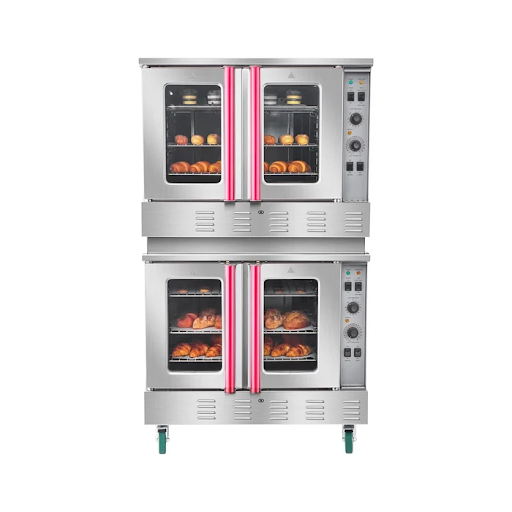
Thanksgiving week is the busiest stretch of the year for bakeries, restaurants, and church kitchens across the United States, and the oven decides how many pies, rolls, and trays of vegetables leave the kitchen on time. A gas convection oven is built for that kind of volume, and understanding how its fans, burners, and decks work helps cooks get even results while orders stack up. This guide explains the airflow, the loading habits, and the practical details that matter when an oven runs from morning until night.
What the Fan Actually Does
A conventional oven heats a cavity and relies on the air inside to carry warmth by natural drift, which leaves hot spots near the burner and cooler pockets in the corners. A convection oven adds a fan that keeps the air moving. Moving air strips away the thin, cool layer of vapor that forms around food, so heat reaches the surface faster. The effect is similar to the difference between a still winter day and a windy one: the same temperature feels very different when the air moves.
Fuel, Pressure, and Pilot Checks
A bakery oven that runs on gas depends on a steady supply at the right pressure. A regulator on the line holds the pressure at the level the burners expect, and a drop in pressure shows up as weak flames and slow recovery. Check the pilot light or igniter at the start of each day, and watch the flame color: a steady blue flame means good combustion, while yellow tips can point to a dirty burner or poor airflow. Any smell of gas calls for shutting off the supply and calling a licensed technician.
Why Gas Burners Suit Heavy Use
Gas ovens heat with a flame and recover quickly when the door has been opened, which matters when trays go in and out all day. Natural gas is also a steady, familiar fuel, and a commercial convection oven of this kind is common in restaurants and bakeries. The trade-off is installation. A gas oven needs a proper gas line, a shutoff valve, a ventilation hood, and a licensed installer, because a poorly fitted joint or a blocked flue can leak gas or carbon monoxide, a colorless gas that is dangerous in an enclosed room.
Decks, Racks, and Independent Control
A double deck layout stacks two baking chambers, each with its own door, so a kitchen gets two ovens in the floor space of one. Each deck can be set to a different temperature, which lets a baker hold rolls at one setting while finishing a casserole at another. Racks slide in at several levels, and the spacing between them matters, because pans placed too close restrict airflow and cause uneven browning.
Loading for Even Heat
Airflow works best when it can pass around every pan. Leave a gap between trays, avoid covering a whole rack with foil, and place the heaviest, wettest items on the lower racks. Rotate trays halfway through longer bakes, since the side nearest the fan can brown faster. Fill the oven evenly rather than crowding one side, because an unbalanced load changes the airflow.
Adjusting Recipes
Because moving air cooks faster, many recipes call for a lower temperature or a shorter time in a convection oven. A common starting point is to reduce the temperature by about twenty-five degrees Fahrenheit and check early. Delicate batters, such as sponge cakes, may prefer the fan on a low setting or off. Taking notes on each product, with temperature, time, and fan setting, builds a reliable chart for the whole kitchen.
Preheating and Recovery
An oven should reach temperature before the first tray goes in, and an oven thermometer placed inside confirms what the dial claims. After a door opens, heat escapes and the oven takes a moment to recover, so avoid opening it more often than needed.
Ventilation and Safety
A kitchen with gas appliances needs fresh air and exhaust. Keep the hood clean, check that vents are clear every week, and install a carbon monoxide alarm. A few safety habits help during a busy week:
- Wear heat-resistant gloves
- Keep the floor dry near the doors
- Check the pilot or igniter each day
- Know where the gas shutoff is
Keeping the Oven Clean
Grease and baked-on spills reduce efficiency and can become a fire risk. Wipe the interior after each shift when it is cool enough, clean the door glass, and inspect the gaskets for cracks. Fan blades should be checked for buildup.
Planning for the Rush
A holiday week puts the oven under heavy use, so plan the production schedule. Stage trays in order of bake time, share decks between products that use similar temperatures, and keep a spare set of pans ready. Kitchens that rely on a gas convection oven for the rush often look at the wider range of industrial equipment for commercial kitchens and workshops, so that racks, storage, and cold equipment keep pace with the oven.