

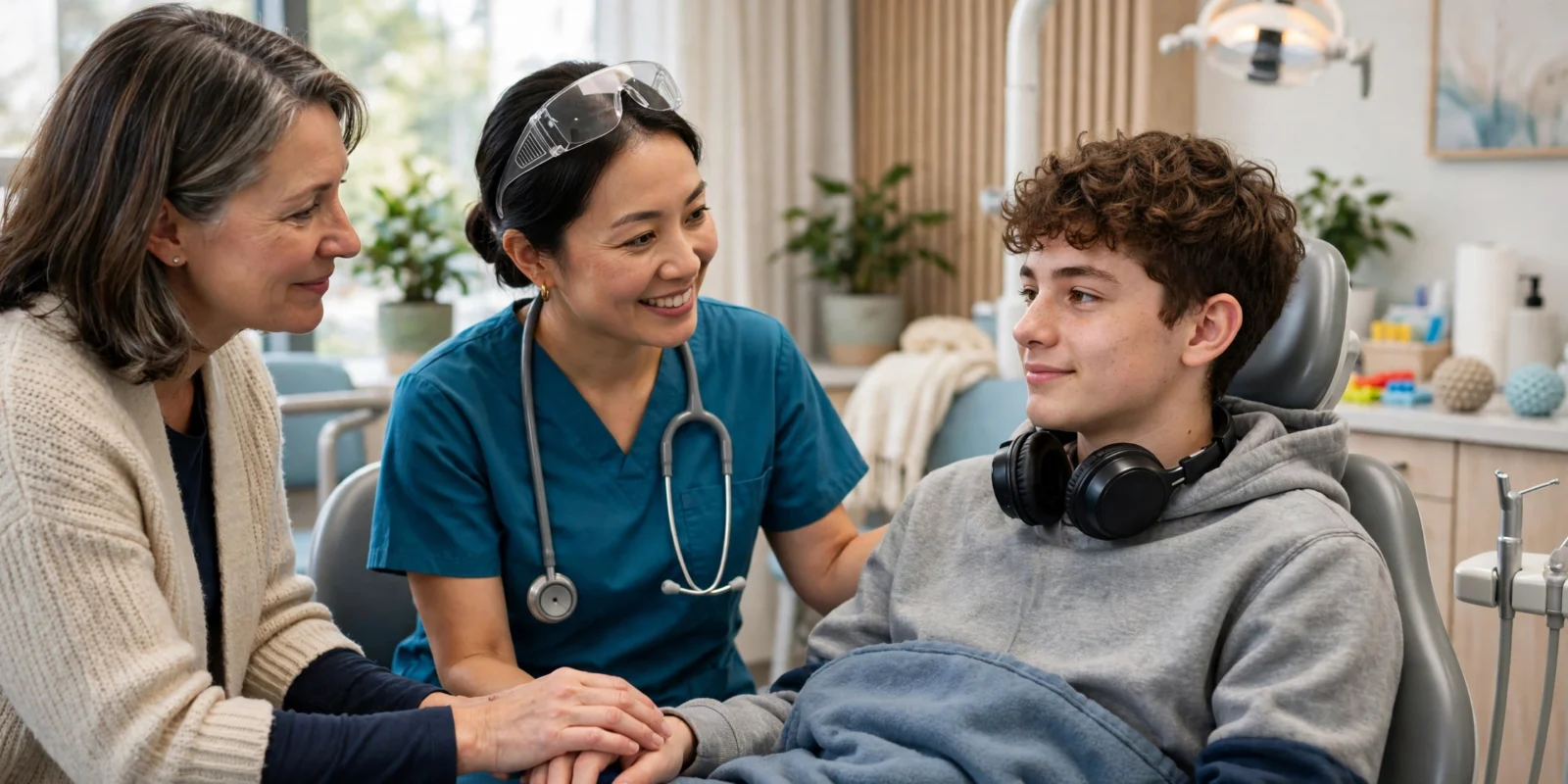
You may be carrying more than one worry into this appointment. Will the dentist understand your loved one’s needs, or your own? If you are looking for special care dentistry in San Jose, you may also wonder whether there will be sensory overload, fear, resistance, or a shutdown halfway through the visit. If you have been through a rough medical or dental experience before, even making the appointment can feel like a lot.
That is why knowing what comes next at a special needs dental appointment matters. Predictability lowers stress. A good visit usually follows a simple pattern, with more time, clearer communication, and adjustments that fit the person in the chair. Special needs dental care is not about forcing someone through a standard routine. It is about meeting them where they are and making oral care safer, calmer, and more realistic.
A special needs dentist plans for comfort before the exam begins
The visit often starts before you ever sit down in the exam room. A special needs dentist may ask about medical history, medications, mobility, communication style, sensory triggers, and past dental experiences. That can feel personal, but it helps the team avoid common problems. Some medicines cause dry mouth, which raises the risk of cavities and gum disease. The HRSA oral health guidance for older adults highlights how health conditions, medications, and daily care challenges can change dental needs over time.
At check in, the staff may keep the waiting time short or offer a quieter space. For some patients, bright lights, noise, unfamiliar smells, and touch are enough to derail the visit before it starts. For others, the hard part is not sensory stress but understanding what will happen and when. A good team explains each step in plain language, gives time to process, and does not rush because the schedule says it is time.
You might see simple changes that make a big difference. The dentist may count teeth first and save cleaning for later. They may let the patient hold a mirror, sit partly upright, keep headphones on, or take breaks every few minutes. If the patient uses a wheelchair, has limited neck control, or needs transfer support, the team may adapt the setup rather than expect the patient to adapt to the room.
Special needs dentistry often moves at the patient’s pace
A standard dental appointment can feel fast and impersonal. That pace does not work for many people with developmental disabilities, physical disabilities, dementia, anxiety, autism, or complex medical needs. What to expect at a special needs dental appointment is usually a slower build. First trust, then observation, then care.
Sometimes the whole first visit is just getting familiar with the office, meeting the dentist, and allowing a brief look inside the mouth. That may seem small, but it is often the reason the next visit goes better. The goal is not to prove that someone can “get through it.” The goal is to build a path to regular care.
When a patient cannot explain pain clearly, small changes in eating, sleep, behavior, or mood can be clues. MedlinePlus describes how dental problems may show up as irritability, trouble eating, bad breath, bleeding gums, or facial swelling in people who cannot easily report symptoms. Their page on dental care and special needs is a useful reminder that behavior changes are sometimes pain signals, not “noncompliance.”
If sedation is discussed, the conversation should be specific. Why is it being considered? What level is appropriate? What are the risks, and what can be tried first? Sedation can help in some cases, but it is not the first answer for every patient. Many people do better with desensitization, visual supports, shorter visits, and a team trained to read distress early.
Practical differences between a standard visit and a special needs dental appointment
| Part of the Visit | Standard Dental Appointment | Special Needs Dental Appointment |
|---|---|---|
| Scheduling | Routine time slot, limited pre visit planning | Longer slot, review of medical and sensory needs in advance |
| Waiting room | May involve delays and a busy environment | Often adjusted to reduce noise, crowds, and waiting time |
| Communication | Fast instructions, assumed understanding | Simple language, visual cues, repetition, caregiver input |
| Exam pace | Set office routine | Patient led pace with breaks and step by step exposure |
| Care approach | One size fits most | Adapted for mobility, behavior, cognition, and medical conditions |
| Follow up | General home care advice | Personalized home care plan for daily challenges and support needs |
Training matters here. Providers who understand disability related barriers are more likely to prevent a bad experience from turning into years of avoided care. The University of Delaware’s oral health training for professionals points to the value of provider education in treating patients with varied support needs. That affects everything from positioning to communication to whether a patient leaves feeling safe enough to come back.
Three steps you can take before the appointment
Share the full picture. Tell the office about diagnoses, medications, allergies, mobility needs, communication methods, sensory triggers, and what has gone wrong at past appointments. Also share what helps. A favorite object, a certain phrase, a slow count before touch, or an early morning appointment can change the whole visit.
Practice the routine at home. Walk through opening the mouth, counting teeth, wearing sunglasses, or reclining slightly. Use photos, a short written sequence, or a visual schedule if that helps. This is often the easiest way to reduce fear around a special needs dentist appointment without adding pressure.
Bring support, not surprises. Pack insurance information, medication lists, comfort items, and any communication device the patient uses. Arrive a little early if transitions are hard, but not so early that waiting becomes the stress point. If the person is likely to struggle, ask in advance whether the office can minimize waiting or split care into shorter visits.
Knowing what comes next makes dental care more manageable
The best special needs dentistry does not expect perfect cooperation. It expects real human limits and plans around them. If you know the team will ask questions, move slowly, and adapt the environment, the appointment becomes less of a blind leap and more of a clear next step.
You do not need to solve everything before the visit. You just need a dentist who sees the person first, understands the barriers, and builds care around them. That is what good special needs dentist care is meant to do.