

Core Curriculum and Clinical Experience Requirements
Are you considering a rewarding career in healthcare? Phlebotomy offers a fast-track entry into a vital role within the medical field. Phlebotomists are essential professionals. They specialize in collecting blood samples, which are crucial for accurate diagnosis and patient treatment.
The demand for skilled phlebotomists is growing rapidly across the U.S. This makes it an excellent time to pursue this profession. We understand you are looking for phlebotomy training schools near you.
This comprehensive guide will walk you through everything you need to know. We will cover typical admission requirements, program durations, and associated costs. We will also explore curriculum details, clinical experience, and certification needs. Our goal is to help you choose the best phlebotomy training program to kickstart your career by October 2026.
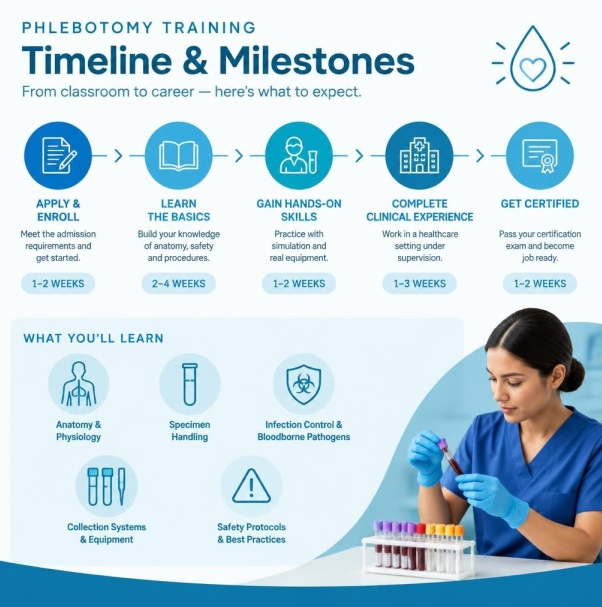
Phlebotomy training programs are designed to equip students with the essential knowledge and practical skills needed to safely and effectively collect blood samples. The curriculum is comprehensive, covering a range of topics from human anatomy to strict safety protocols. A strong emphasis is placed on infection control and understanding bloodborne pathogens to ensure both patient and phlebotomist safety. Students learn about various vacuum collection systems, syringes, and butterfly needles, alongside the critical safety standards that govern their use in clinical settings.
Anatomy, Specimen Handling, and Laboratory Safety
A foundational component of any reputable phlebotomy program is a thorough understanding of the human circulatory system. This knowledge is crucial for successful vein selection, minimizing patient discomfort, and preventing complications. Students delve into the specifics of different blood collection methods, including venipuncture, dermal puncture (finger sticks and heel sticks), and sometimes even arterial puncture for advanced courses.
Beyond the actual draw, the curriculum extensively covers specimen handling. This includes understanding various tube additives, which prevent clotting or preserve samples for specific tests, and the critical order of draw to avoid cross-contamination. Proper labeling, transportation, and storage of specimens are also taught, ensuring the integrity of samples for laboratory analysis. Programs often introduce students to CLIA-waived testing, which are simple laboratory examinations that can be performed with minimal risk of error. Laboratory safety is paramount, encompassing chemical hygiene, waste disposal, and emergency procedures.
Hands-On Clinical Rotations and Venipuncture Minimums
Theoretical knowledge is only one part of becoming a competent phlebotomist. Practical, hands-on experience is indispensable. Most phlebotomy programs incorporate a clinical practicum, which is a supervised training period in a real-world healthcare setting. This allows students to apply their classroom learning in a live environment, interacting with diverse patient populations under the guidance of experienced preceptors.
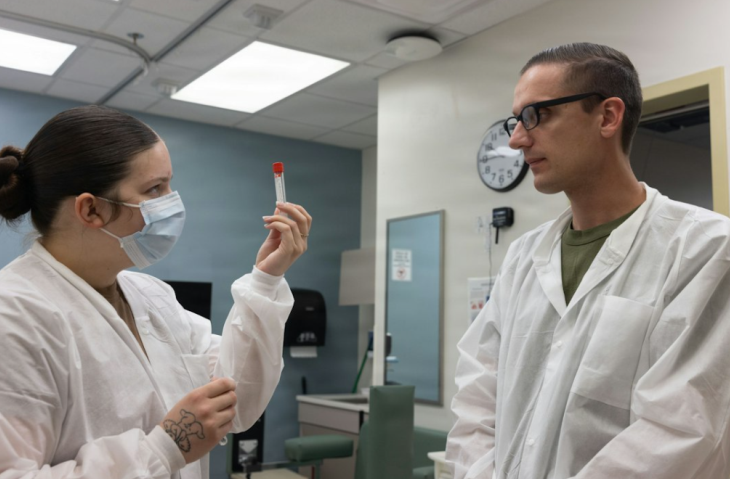
A common requirement for program completion and certification eligibility is a minimum number of successful blood collections. For instance, programs often mandate at least 100 successful venipunctures and a specified number of dermal punctures. The Community College of Philadelphia’s Phlebotomy Certificate Course, for example, requires students to complete 100 clinical hours and perform 100 venipunctures during their clinical practice. Similarly, Wake Tech’s Phlebotomy program includes a clinical component of 100 hours and 100 blood collections. These clinical rotations typically take place in hospitals, outpatient clinics, or reference laboratories, providing exposure to various patient demographics and collection scenarios. Strict adherence to patient identification protocols is emphasized to prevent errors.
Program Length, Admission Criteria, and Financial Considerations
Embarking on a phlebotomy career requires careful consideration of program length, admission requirements, and financial commitments. While programs are generally shorter than other allied health fields, details can vary significantly between institutions.
Typical Timelines and Accelerated Schedules
The duration of phlebotomy training programs can range from a few weeks to a full semester, depending on the school and program structure. Many programs are designed for rapid entry into the workforce. For example, Wake Tech’s Phlebotomy program can be completed in three months or less, often structured as a 12-week hybrid schedule with a mix of online and in-person components. Virginia Western’s Phlebotomy program offers completion in one semester, which is typically 16 weeks for fall or spring terms, or an accelerated 10-week option for summer terms. These programs often combine evening lectures with skills labs, providing flexibility for students balancing other commitments.
Tuition Costs, Workforce Grants, and Scholarships
The cost of phlebotomy training can vary widely based on the institution type (community college vs. private vocational school) and location. Tuition can range from a few hundred dollars to several thousand. For instance, the GTCC Phlebotomy Training Program has a registration fee of $261.50, which includes the textbook and workbook. In contrast, the Virginia Western Phlebotomy program, requiring 16 credits, has an estimated in-state tuition of $3,065.60.
Beyond tuition, prospective students should budget for additional expenses such as:
- Fees:Lab fees, liability insurance, and technology fees are common. Wake Tech, for example, lists an $18 campus fee, $6 liability insurance, $99 supply fee, and $39 rotation manager fee.
- Books and Supplies:Textbooks, workbooks, and scrubs can add several hundred dollars to the total cost.
- Health and Background Checks:Immunizations, drug screenings, and criminal background checks are mandatory for clinical placement and can cost around $100-$200. Virginia Western estimates background check/drug screen costs at $89.00.
- Certification Exam:The fee for the national certification exam is an additional cost, typically paid after program completion.
Fortunately, various financial aid and scholarship options are often available. Many community colleges offer workforce development grants or scholarships specifically for short-term career training programs. For example, the GTCC Phlebotomy Training Program mentions the Shift_ed Short-Term Workforce Training Scholarship for recent Guilford County School graduates and GTCC Workforce Training Scholarships. Students should inquire about state-specific funding, institutional scholarships, and payment plans.
Here’s a comparison of program formats, duration, and estimated costs from some of our research examples:
Program Format Duration Estimated Tuition/Fees (Excl. Books/Health) Clinical Hours/Collections Community College of Philadelphia Certificate Course 1 Semester (approx. 16 weeks) Varies (not specified in research) 100 hours / 100 venipunctures Wake Tech Hybrid 12 weeks (3 months or less) ~$261 (registration, campus, liability, supply, rotation fees) 100 hours / 100 blood collections Virginia Western Certificate Program 1 Semester (10-16 weeks) $3,065.60 (16 credits, in-state tuition only) Included in 8-week internship GTCC Training Program Varies (short-term) $261.50 (registration, textbook, workbook) Included in clinical experiences
Typical Admission Requirements
Admission requirements for phlebotomy training programs are generally accessible, making it a popular entry point into healthcare. Common prerequisites include:
- Age:Applicants must typically be at least 18 years old.
- Education:A high school diploma or GED equivalent is almost always required. Some programs may ask for English placement tests.
- Background Checks:Due to the nature of working with vulnerable patients, criminal background checks and drug screenings are mandatory. Students with certain felony convictions, especially within the last 10 years, may be ineligible for clinical placement or certification.
- Immunization Records:Comprehensive immunization records are essential, often including proof of vaccination for Hepatitis B, MMR, Varicella, Tdap, a TB test, and seasonal flu shots.
- CPR Certification:Many programs require Basic Life Support (BLS) CPR certification, usually from the American Heart Association.
- Health Insurance:Proof of medical insurance is often a requirement for clinical rotations.
- Essential Functions:Applicants should be able to perform the essential functions of a phlebotomist, including mobility, communication, and safe venipuncture technique.
It’s crucial for prospective students to thoroughly review the specific admission criteria for each program they consider, as these can vary.
Exploring Pathways: How Futuro Health Phlebotomy Training Supports Allied Health Careers
For individuals seeking to enter the allied health workforce, understanding various training pathways is key. Many organizations and institutions are dedicated to creating accessible and supportive routes into high-demand healthcare roles. One such initiative focuses on providing comprehensive support for aspiring phlebotomists.
Structure and Benefits of Futuro Health Phlebotomy Training
Futuro Health is an organization committed to growing the allied health workforce by offering innovative training solutions. Their phlebotomy training programs are designed to provide a structured and beneficial learning experience, often featuring a hybrid learning model that combines online didactic instruction with in-person practical skills labs and clinical externships. This approach offers flexibility while ensuring students gain critical hands-on experience.
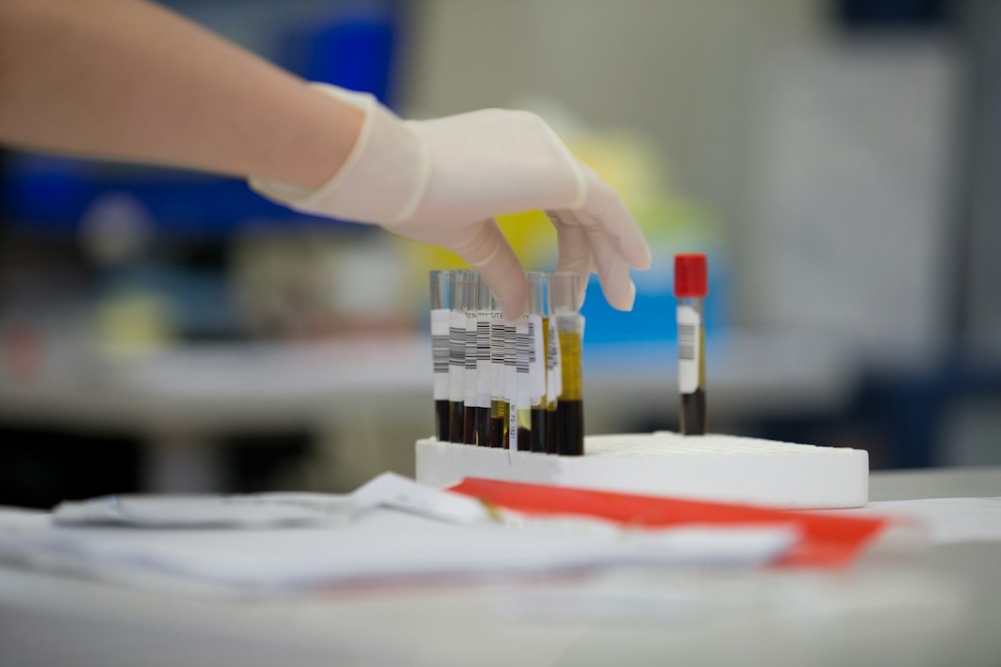
A significant benefit of programs supported by Futuro Health is the emphasis on comprehensive support throughout the student journey. This often includes robust clinical placement support, helping students secure the mandatory hands-on experience needed for certification. They also focus on career navigation and student mentorship, guiding individuals not just through their training but also into successful employment. For many, these programs represent a pathway to tuition-free education, removing significant financial barriers to entering the healthcare field. These initiatives are vital in building strong workforce partnerships and creating accessible healthcare career pathways for adult education learners and those seeking career transitions. To learn more about their approach and available programs, you can explore the opportunities provided by Futuro Health phlebotomy training.
Who Qualifies for Futuro Health Phlebotomy Training Programs?
Eligibility standards for programs supported by Futuro Health generally align with industry best practices and state requirements. These typically include:
- Age Requirements:Applicants must be at least 18 years old.
- Educational Prerequisites:A high school diploma or GED equivalent is usually a fundamental requirement.
- Background Clearance:As with all healthcare roles involving patient contact, candidates must pass criminal background checks and drug screenings.
- Career Transition & Commitment:Programs are often geared towards individuals committed to a career in healthcare, including those looking for a career transition or upskilling within the allied health sector.
Specific eligibility criteria can vary by program and region, so it’s always advisable to consult the program’s official guidelines for the most accurate and up-to-date information.
Certification Pathways and Job Outlook in 2026
Upon successful completion of a phlebotomy training program, the next crucial step for many aspiring phlebotomists is to obtain national certification. This credential significantly enhances employability and demonstrates a commitment to professional standards.
National Certification Exams and State Licensing
While not always legally mandatory in every state, national certification is highly recommended and often preferred, or even required, by employers. The most widely recognized certification is the Phlebotomy Technician (PBT) credential offered by the American Society for Clinical Pathology (ASCP) Board of Certification. Programs accredited by agencies like the National Accrediting Agency for Clinical Laboratory Sciences (NAACLS), such as Wake Tech’s program, prepare students specifically for this exam. The Community College of Philadelphia boasts a 100% certification pass rate for the ASCP exam for the years 2021-2025, highlighting the effectiveness of strong programs.
To be eligible for the ASCP PBT exam, candidates typically need to complete a NAACLS-approved phlebotomy program or meet specific education and experience requirements. The certification exam process involves a comprehensive test covering topics from patient identification and specimen collection to safety and quality control.
In some states, like California, specific state health department licensing is required in addition to, or in lieu of, national certification. California requires phlebotomy programs to be approved by the Department of Public Health, and offers different levels of certification (e.g., Certified Phlebotomy Technician I or II), which may involve basic phlebotomy courses or advanced phlebotomy courses. It’s essential to research the specific requirements of the state where you plan to work.
Here are some primary certification study strategies to help you prepare:
- Review Course Materials:Go back through all your textbooks, notes, and lab manuals from your training program.
- Practice Questions:Utilize practice exams and question banks specifically designed for the ASCP PBT or relevant state exams.
- Flashcards:Create flashcards for key terms, tube additives, order of draw, and venipuncture sites.
- Study Groups:Collaborate with classmates to review challenging concepts and quiz each other.
- Clinical Experience Reflection:Think back on your clinical rotations and the real-world scenarios you encountered, connecting them to theoretical knowledge.
- Understand Test Format:Familiarize yourself with the exam structure, timing, and question types.
Employment Opportunities and Salary Expectations
The job outlook for phlebotomists is exceptionally strong. The U.S. Bureau of Labor Statistics (BLS) projects a faster-than-average growth for phlebotomy positions, indicating a high demand for skilled professionals. This growth is driven by the increasing need for laboratory testing as the population ages and medical technologies advance.
As of October 2026, phlebotomists can find employment in a variety of settings:
- Hospital Laboratories:A major employer, offering diverse patient interactions and a environment.
- Diagnostic Centers and Outpatient Clinics:These facilities often specialize in specific types of testing or serve particular patient groups.
- Blood Donation Facilities:Phlebotomists play a critical role in collecting blood from donors.
- Physicians’ Offices:Some larger practices employ phlebotomists to handle in-house blood draws.
- Reference Laboratories:These labs process samples from various healthcare providers, often requiring phlebotomists for mobile or on-site collections.
Salary expectations for phlebotomists can vary based on location, experience, and employer. Entry-level positions for certified phlebotomists typically offer competitive hourly wages. For example, some sources indicate starting hourly wages in the range of $16–$18. With experience and additional certifications, phlebotomists can see their earnings increase. The high program placement rate of schools like the Community College of Philadelphia (85% in 2025) suggests strong career prospects for graduates. The high location quotient (4.08) for phlebotomy jobs in Wake County, North Carolina, further underscores significant regional workforce demand.
Frequently Asked Questions About Phlebotomy Training
We understand you likely have many questions as you consider a career in phlebotomy. Here, we address some of the most common inquiries about training programs.
How many blood draws are required to complete phlebotomy clinical training?
The number of required blood draws, specifically successful venipunctures, is a critical component of phlebotomy clinical training and a common requirement for certification eligibility. While the exact number can vary slightly by program and certifying body, a widely accepted standard is 100 successful venipunctures. In addition to venipunctures, students are often required to perform a certain number of dermal punctures (finger or heel sticks).
These procedures must be performed under direct preceptor supervision during the clinical externship. This ensures students develop clinical competency and confidence before entering the workforce. For instance, both the Community College of Philadelphia and Wake Tech’s programs explicitly state a requirement of 100 clinical hours and 100 blood collections. This hands-on practice is invaluable for mastering the technique, patient interaction, and safety protocols.
Can you complete phlebotomy coursework online?
While the didactic (classroom) portion of phlebotomy training can often be completed online or through a hybrid curriculum, it is not possible to complete an entire phlebotomy training program solely online. Phlebotomy is a hands-on skill that requires extensive practical application.
Many programs offer virtual lectures and online coursework for theoretical subjects like anatomy, medical terminology, and safety protocols. However, mandatory in-person skills labs are essential for practicing venipuncture techniques on manikins and fellow students. Following this, a supervised clinical externship or practicum is required to gain real-world experience performing blood draws on actual patients. Even some “online advanced” phlebotomy courses, as noted in California’s approved school lists, still necessitate an in-person clinical component to meet certification requirements. Therefore, while online components offer flexibility, expect a significant in-person practical and clinical commitment.
What is the difference between basic and advanced phlebotomy certification?
The distinction between basic and advanced phlebotomy certification often relates to the scope of practice and the complexity of procedures a phlebotomist is qualified to perform, particularly in states with tiered licensing.
- Basic Phlebotomy Certification (e.g., CPT I in California):This typically covers entry-level venipuncture, dermal puncture, and basic specimen collection procedures. The training focuses on routine blood draws, patient identification, specimen handling, and fundamental safety protocols. Most initial phlebotomy training programs prepare students for this level of certification, allowing them to work in most hospitals, clinics, and diagnostic labs.
- Advanced Phlebotomy Certification (e.g., CPT II in California):This level usually signifies additional training and competency in more complex procedures or specialized specimen collection. This might include arterial puncture (often performed by more specialized personnel but sometimes within the scope of advanced phlebotomists), advanced blood bank procedures, or more intricate collection techniques for specific laboratory tests. Some schools offer advanced 20-hour courses specifically for this. Advanced certification often requires a certain amount of experience as a basic phlebotomist and further specialized training. The availability and requirements for advanced certification are typically dictated by state regulatory levels and specific employer needs.
Understanding these distinctions is important when choosing a program, especially if you have long-term career goals that involve more specialized phlebotomy roles.
Conclusion
Embarking on a career as a phlebotomist offers a direct and impactful entry into the dynamic healthcare field. By October 2026, the demand for skilled professionals who can accurately and safely collect blood samples remains high, making this an opportune time to pursue training.
We’ve explored the essential components of phlebotomy training, from the core curriculum covering anatomy, specimen handling, and rigorous safety standards, to the critical hands-on clinical experience that includes a minimum of 100 successful blood collections. We’ve also delved into the varying program lengths, admission criteria such as a high school diploma and background checks, and the financial considerations, including tuition costs and available scholarships.
Choosing the right phlebotomy training school near you involves carefully evaluating program structure, accreditation, clinical opportunities, and student support. National certification, particularly through organizations like ASCP, significantly enhances your career readiness and opens doors to diverse employment opportunities in hospitals, clinics, and diagnostic centers.
With a strong foundation in clinical skills, a recognized certification, and a commitment to patient care, you will be well-prepared to contribute to the healthcare workforce and build a rewarding career as a phlebotomist.