


You have seen them again. On the street. On TikTok. On campus. The varsity jacket is back. And it is not back by accident.
The big, fuzzy letter on the chest does most of the work. Those soft chenille patches are the first thing people notice. They are also the first thing people remember. Strip away the letter, and it is just a nice jacket. Add it back, and the jacket has a story.
There is a reason these details have remained popular for decades. Originally used to represent school achievements, team memberships, and personal accomplishments, chenille designs have gradually become a defining feature of vintage-inspired fashion.
Today, they offer more than a nod to the past; they give people a way to express individuality through clothing. Strip away the lettering, and you have a nice jacket. Add it back, and the jacket has a story, a personality, and a detail that makes it memorable.
The Return of Varsity Jackets
So why now?
Short answer: nostalgia sells, but comfort keeps it alive.
Fashion keeps cycling back to Y2K style, retro sportswear, and collegiate dressing. The varsity jacket fits all three. It also fits real life. Here is why it works again:
- It is easy to layer. Tee, hoodie, knit. It works over all of them.
- It has structure. The ribbed collar, contrasting sleeves, and snap buttons give shape to a simple outfit.
- It suits everyone. Oversized, cropped, or classic fit. Men and women wear it in completely different ways.
- It is high-low fashion. You can wear it with trainers and jeans. Or with tailored trousers. Both look right.
Old letterman jackets were about one school. One team. Modern ones are not. Today, the jacket is a blank canvas. The patches decide what it says.
What Makes Chenille Patches So Popular?
What are chenille patches?
They are patches made from looped yarn stitched onto a felt base. The yarn stands up in tight loops. It feels soft. It looks raised. People often call it a towel-like or fuzzy texture.
Fun detail. Chenille is French for caterpillar. Look at the pile up close, and the name makes sense.
The stitch has a name too. It is called the moss stitch. That stitch creates the thick, plush finish you see on a classic varsity letter. And that texture is the point.
Prints are flat. Embroidery is flat too, mostly. Chenille is not. It has depth. It catches light. You can read a bold letter from across the street. That is why it suits some designs and not others:
- Best for: big letters, numbers, mascots, and simple shapes
- Not ideal for: tiny text and fine lines
- Best base: a strong felt backing, often in a second color for the border
Small detail work can still be added. Makers often use flat embroidery for outlines, names, and year patches. Chenille does the statement. Embroidery does the detail.
Chenille vs Embroidered Patches
This is the question most people ask. The SERP comparison is simple. Texture versus detail.
| Factor | Chenille Patches | Embroidered Patches |
| Texture | Plush, raised, fuzzy loops | Flat, tight stitches |
| Material | Looped yarn on a felt base | Thin thread on twill or felt |
| Best for | Varsity letters, numbers, mascots | Logos, names, small text |
| Detail level | Bold shapes only | Fine lines and sharp detail |
| Reads best | From a distance | Up close |
| Feel on a jacket | Thick and heavy | Thin and light |
Neither is better. They just do different jobs. Most classic jackets use both. One big chenille letter on the chest. Smaller embroidered patches on the sleeves.
How Chenille Patches Transform Jacket Designs
Placement matters more than people think.
How are chenille patches used on jackets?
- Chest: one main initial. This is the classic varsity chest letter, usually 5 to 6 inches tall.
- Back: a large name, number, or mascot. This is the statement piece.
- Sleeves: smaller symbols, year patches, award stars, or captain bars.
Change the placement, and you change the whole mood.
One letter looks clean. Classic. A letter plus a year and a mascot looks personal. It starts to read like a record, not a purchase.
Colour does the same thing:
- Red letter, gold border, navy jacket. Pure retro.
- White letter on a black jacket. Clean and modern.
- Pastel letter on a cream jacket. Soft, fashion-led, very current.
That range is why custom varsity jackets keep growing. The base can stay the same. The patches make each one different.
Subtle point here. Good makers, including Standard Patches, usually start with the letter, not the extras. Get the size, colour, and felt border right first. Then add the small pieces.
Styling Varsity Jackets in Modern Fashion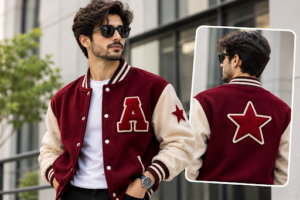
You do not need a new wardrobe for this trend. That helps.
Three easy ways to wear it:
- Everyday casual: Open jacket. Plain white tee. Straight-leg jeans. Clean trainers. Let the letter do the talking.
- Streetwear: Oversized fit. Hoodie underneath. Cargo trousers. Chunky sneakers. Keep the colours limited.
- Smart casual: Fitted jacket. Fine knit. Tailored trousers. Loafers. It softens the sporty feel just enough.
Cropped styles are big now too. They work well with high-waisted denim, midi skirts, and dresses. The contrast is the look.
One rule helps. Make the jacket the centrepiece. It already has colour, texture, and graphics. It does not need competition.
Personalization Is Shaping Modern Fashion
People are tired of looking the same. That is the honest reason behind personalized clothing.
An initial means something. So does a date. A city. A number you wore for years. These are small things. But they turn a normal jacket into your jacket. There is a second effect too. People keep personal pieces longer.
A jacket tied to a school, a team, or a milestone does not get thrown out after one season. It holds a memory. That gives it value no trend can match.
Social media pushed this further. Outfits get shared fast. Sameness gets noticed fast too. Different patch colours and placements are an easy way to stand out. So buyers are no longer just picking a size. They are picking:
- The letter or logo
- The yarn and felt colours
- The size and placement
- The extra patches that finish the story
Are Varsity Jackets Here to Stay?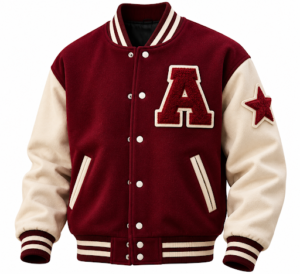
Yes. Probably for a long time. Comfort. Heritage. Adaptability. Few pieces tick all three boxes.
The shape will keep changing. Cropped one year. Oversized the next. New fabrics, new colours, new sleeves. That is normal. The letter will stay. It is the link to the original letterman jacket. It is also the part people can make their own.
So this revival is not just a throwback. It is an old favourite, worn in a new way. One letter at a time.
FAQs
1. What are chenille patches?
Patches made from looped yarn stitched onto a felt base. The loops create a soft, raised, fuzzy surface. They are the classic patch used for varsity letters, numbers, and mascots.
2. What is the difference between chenille and embroidered patches?
Chenille gives texture. Embroidery gives detail. Chenille is thick, plush, and best for bold shapes. Embroidered patches are flat, lighter, and better for small text and fine lines.
3. How do you attach chenille patches to a jacket?
Sew them on. That is the standard method. Chenille is thick and heavy, and iron-on backing often struggles to hold it on wool or leather.
4. What type of patch is traditional for letterman jackets?
Chenille. It has been the standard for letterman jackets for generations, mainly for the school initial on the chest, plus sport emblems and year patches on the sleeves and back.