

Some of the most familiar moments on a road bike happen between efforts. A rider eases off, lets the pedals pause and prepares for the next change of pace. Recreating that freedom indoors involves more than showing a convincing road on a screen. The way the bike behaves under the rider has a part to play.
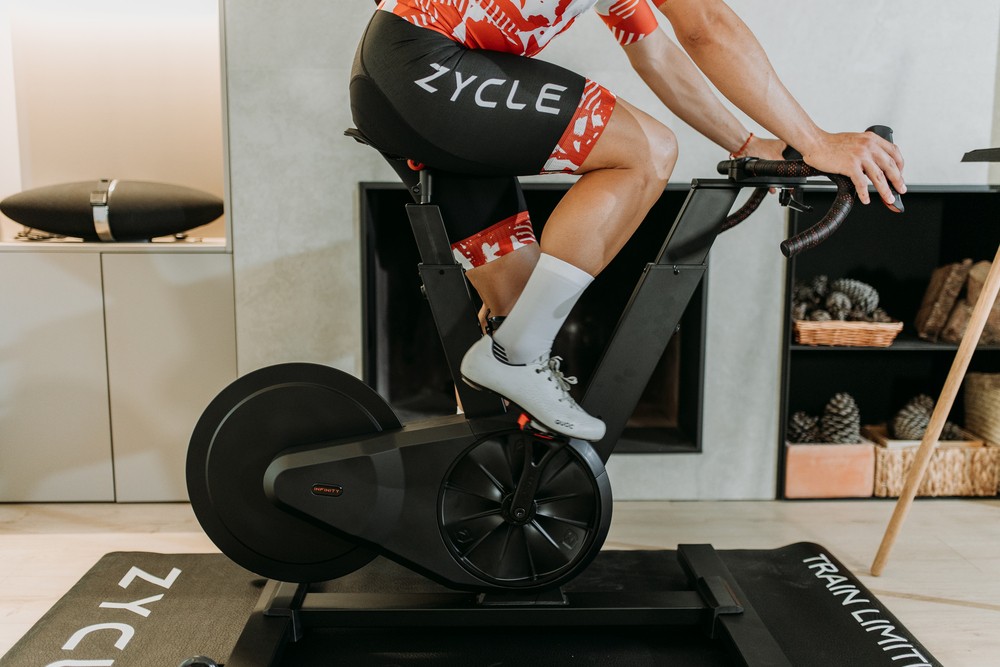
With ZBike Infinity, ZYCLE brings a freewheel mechanism, road handlebars and wireless electronic shifters into its indoor bike range. These features put familiar riding actions at the centre of the design, alongside configurable virtual gears and connected training functions. The emphasis is on how a rider interacts with the equipment throughout a session.
The moments when the pedals stop
The freewheel allows the rider to stop pedalling while the flywheel continues to turn. This changes the mechanical relationship between the pedals and the rotating system compared with a fixed-gear indoor bike. The ability to pause the pedals is a recognisable part of riding outdoors and a defining feature of Infinity’s approach to indoor cycling.
That distinction is felt during transitions, not just during sustained effort. The rider can ease off and resume pedalling without maintaining the continuous pedal movement required by a fixed-gear mechanism. It gives the session a different rhythm, with changes in effort accompanied by an action familiar from a conventional bicycle.
Road handlebars reinforce that connection through the rider’s contact points. Wireless electronic shifters place gear changes at the hands, with up to 24 virtual gears available. The transmission can be configured to simulate a single- or double-chainring setup, allowing the rider to choose how the virtual gearing is arranged.
On a simulated route, this gives gear selection a practical role. As the terrain changes, the rider can choose a ratio that suits the cadence they want to maintain. The experience draws on actions already used outdoors: noticing a change in the route, shifting and settling into the next stretch of riding.
The freewheel and gear controls therefore address different parts of the same experience. One determines what happens when pedalling stops. The other provides choices while the rider is applying effort. Together, they shape the way Infinity responds to a session built around changing terrain and pace.
Setting the bike around the rider
Moving a training session indoors also raises the question of position. Familiar controls are only part of the relationship with the bike. Saddle and handlebar settings determine where the rider sits and places their hands, while crank length affects the dimensions of the pedalling movement.
ZBike Infinity offers five crank-length positions: 165, 167.5, 170, 172.5 and 175 mm. These provide options when setting up the bike for different riders or comparing the indoor configuration with an existing bicycle. Its specified Q-factor is 152 mm, another dimension to consider as part of the overall setup.
The road handlebar uses a standard 31.8 mm mounting diameter. This is a concrete detail for riders considering the contact points they prefer. Rather than treating position as a fixed part of the equipment, the available adjustments allow time to be spent preparing the bike around its intended user.
This preparation matters across different types of riding. A longer steady session and a sequence of shorter efforts may place different demands on how the rider uses the bars and settles into the bike. Having a considered setup gives those sessions a consistent starting point.
Linking the physical ride to the virtual route
Infinity’s magnetic resistance works with compatible cycling software to bring changes in the session to the pedals. The connection provides the bridge between the virtual environment and the physical load, while the rider continues to make decisions through the gear controls.
The bike supports Bluetooth, including FTMS, CPS and CSCS, as well as ANT+ and a wired connection option. These provide different ways to build the training setup around compatible equipment. The functions available depend on the application and connection being used, making that combination part of preparing the session.
Power measurement adds another reference for following the effort. ZYCLE states a measurement error below 1% for Infinity. This manufacturer specification is relevant to riders who use power targets and review recorded sessions, giving the data a place alongside the sensations of the ride.
The result is an indoor bike organised around several parts of road riding: the pause between pedal strokes, a gear change at the hands and a position prepared for the rider. A virtual route provides the setting, but those physical interactions give ZBike Infinity its particular character when the next effort begins.