

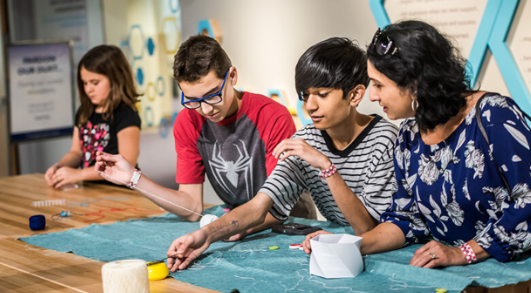
Why Accessible Science Education Benefits Every Child
Walk into any classroom, and you’ll quickly notice that no two children learn in the same way. Some ask endless questions, others learn by observing, and many understand new ideas best when they can experiment and explore. Science naturally encourages curiosity, but every child should have an equal opportunity to experience that excitement.
That’s why accessible science education matters. It’s about creating learning experiences that remove barriers and give every child multiple ways to participate, discover, and succeed. Rather than designing lessons for one type of learner, accessible science programs recognize that children have different strengths, abilities, and learning preferences, and that those differences enrich the learning experience for everyone.
As more families and educators explore resources like the inclusive learning programs in Orlando, there’s a growing recognition that accessibility isn’t simply an accommodation. It’s a better way to teach science because it encourages every child to ask questions, investigate ideas, and engage with the world around them.
Why Does Accessible Science Education Benefit Every Child?
Accessible science education is often associated with supporting children with disabilities, but its impact reaches much further. When learning environments are designed to be flexible and inclusive, every student benefits.
Many educators now incorporate approaches such as Universal Design for Learning (UDL), which encourages presenting information in different ways and allowing students multiple opportunities to participate and demonstrate their understanding. Instead of expecting every child to learn through the same method, accessible science education embraces visual, hands-on, verbal, and collaborative learning experiences.
This approach helps children:
- Participate actively instead of simply observing.
- Build confidence by learning in ways that suit them.
- Develop critical-thinking and problem-solving skills.
- Collaborate with classmates who bring different perspectives.
- Stay curious through exploration and discovery.
Rather than creating separate learning experiences, accessibility helps build classrooms where every student can contribute, learn, and grow together.
1. Hands-On Learning Helps Every Student Participate
Science is most effective when children experience it firsthand. While textbooks introduce important concepts, experiments, demonstrations, and investigations allow students to see those ideas come to life.
Hands-on learning also supports a wide variety of learning styles. Some students understand concepts best by watching demonstrations, while others need to build, test, touch, or explore before ideas truly make sense. Providing multiple ways to engage ensures that more children can participate with confidence.
Inquiry-based learning, where students ask questions, make observations, and test ideas, encourages children to think like scientists instead of simply memorizing facts. This process strengthens both understanding and curiosity.
Interactive science experiences often encourage students to:
- Conduct age-appropriate experiments.
- Observe scientific concepts in action.
- Build models and solve real-world challenges.
- Work together to investigate questions.
- Share discoveries through discussion and reflection.
These learner-centered experiences are one reason accessible science programs in Orlando continue to attract families and educators looking for meaningful STEM opportunities. Instead of expecting every child to follow the same path, they create flexible environments where different learning styles are welcomed and supported.
2. Inclusive Learning Builds Confidence, Collaboration, and Empathy
One of the greatest strengths of accessible science education is that it brings children together through shared discovery.
When students with different abilities, experiences, and learning preferences work side by side, they develop much more than scientific knowledge. They learn to communicate, collaborate, listen to different perspectives, and solve problems as a team.
Inclusive environments also help children recognize that everyone contributes in unique ways. A student who excels at observation may notice details others miss, while another may thrive during hands-on experiments or group discussions. This variety of strengths creates richer learning experiences for the entire class.
For families exploring special needs education in Orlando, inclusive science experiences demonstrate that meaningful participation doesn’t require separating learners. Thoughtfully designed programs encourage every child to contribute, ask questions, and build confidence through success.
These same experiences also benefit children without additional learning needs. By learning alongside classmates with different abilities, students naturally develop empathy, patience, respect, and teamwork, skills that extend far beyond science and into everyday life.
3. Accessible Science Education Builds Stronger STEM Skills for the Future
Science education isn’t only about understanding today’s lessons. It’s about helping children develop the confidence and skills they’ll use throughout their lives.
When learning is accessible, students are more willing to ask questions, test ideas, and solve problems independently. Instead of worrying about finding the “right” answer, they learn that science is a process of exploration, observation, and discovery.
This approach also strengthens the foundations of STEM learning by encouraging children to:
- Think critically when solving problems.
- Make observations and conclude.
- Test ideas through experimentation.
- Communicate their findings with others.
- Build confidence when approaching unfamiliar challenges.
The difference between traditional and accessible science learning is clear:
| Traditional Science Learning | Accessible Science Learning |
| One teaching method for all learners | Multiple ways to participate and learn |
| Students often observe concepts | Students actively investigate and experiment |
| Limited flexibility for different learning styles | Activities adapt to diverse learning needs |
| Learning often ends with the lesson | Curiosity continues beyond the classroom |
This learner-centered approach is why many educators are seeking inclusive learning programs in Orlando that encourage active participation while helping students develop skills they’ll continue using throughout school and beyond.
Closing Thoughts
Accessible science education benefits every child because it recognizes that curiosity doesn’t look the same for everyone. Some children learn by observing, others by experimenting, and many by working together to solve problems. When science experiences are designed to support these different approaches, every learner has the opportunity to participate and succeed.
The most meaningful science experiences don’t simply teach facts, they create environments where every child feels confident asking questions, making discoveries, and seeing themselves as capable learners. When accessibility becomes part of the learning experience rather than an afterthought, science becomes something every child can enjoy, explore, and carry with them long after the lesson ends.