

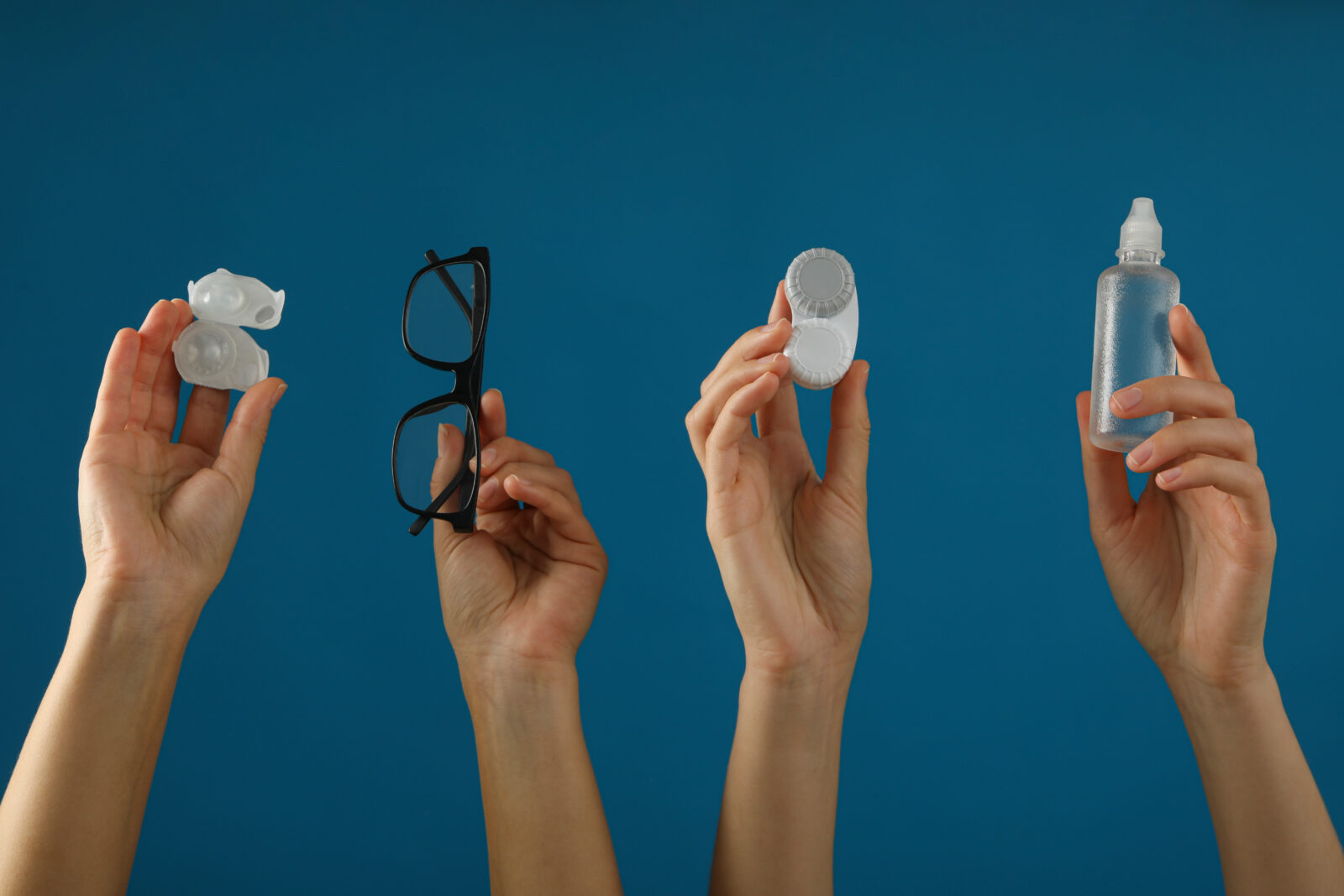
Switching from glasses to contact lenses or getting fitted for contacts for the first time involves more than simply transferring your glasses prescription to a contact lens box. A contact lens exam and fitting is a distinct clinical process that goes beyond a standard eye exam. Understanding what happens in a contact lens fitting gives you a sense of what to expect, and ultimately, what will work best for your eyes.
Here is what happens during a contact lens fitting and why each step is more important than it might appear.
- Your Eye Measurements Are Taken
The first step in a contact lens fitting is measuring the specific dimensions of your eyes that determine which lenses will fit correctly. This includes measuring the curvature of your cornea, the clear dome-shaped surface at the front of the eye, through a process called keratometry or corneal topography. The base curve of a contact lens needs to match the curvature of your cornea closely enough that the lens sits properly on the eye without being too tight or too loose.
The diameter of your iris is also measured to ensure the lens covers the cornea appropriately. These measurements are specific to your eyes and are not interchangeable with your glasses prescription, which is why a separate contact lens exam is required even if you have a current glasses prescription. A lens that does not match your corneal curvature and eye dimensions will not sit correctly, will move excessively during blinking, and will not provide the vision correction your prescription calls for.
The precision of these measurements directly determines how comfortable your lenses are and how well they correct your vision. Lenses that seem close but are not accurately matched to your eye dimensions produce discomfort and vision problems that are often attributed to contacts in general rather than to an inaccurate fit specifically.
- Your Tear Film and Ocular Surface Are Evaluated
Contact lenses rest on the tear film that covers the surface of the eye, which means the health and quality of that tear film directly affects how comfortable lenses are and how well they perform throughout the day. This evaluation is a standard component of a contact lens fitting and one that most first-time wearers do not expect.
Dry eye disease, which affects a significant portion of adults, has a direct impact on contact lens comfort and wearability. A tear film that does not provide adequate lubrication makes contact lens wear uncomfortable, causes lenses to move excessively, and can lead to the end-of-day dryness and irritation that many contact lens wearers assume is normal but is actually a sign of a mismatch between their tear film and their lens type.
Evaluating tear film quality at the fitting stage allows the provider to identify potential dry eye issues before they become problems and to select lens materials and replacement schedules that are better matched to your specific tear film. Silicone hydrogel lenses, daily disposables, and lenses designed specifically for dry eye wearers are all options that perform differently depending on tear film characteristics, and knowing your baseline before selecting a lens type produces better outcomes than discovering the mismatch after several uncomfortable weeks of wear.
Pearle Vision’s contact lens fitting process includes this ocular surface evaluation as a standard component, ensuring that the lenses selected are matched to your eye health as well as your prescription. Booking a contact lens exam with a licensed optometrist gives you access to this level of clinical assessment rather than a simplified fitting process that skips steps that matter for long term comfort and eye health.
- Trial Lenses Are Selected and Applied
Based on your corneal measurements, tear film evaluation, and prescription, your provider selects trial lenses for you to wear during the appointment. The trial lens step is where the fitting moves from measurements on paper to actual lenses on your eyes, and it serves several important purposes that measurements alone cannot fulfill.
First-time wearers receive instruction on how to insert and remove lenses safely, which is a practical skill that takes a few attempts to develop and is much better learned in a clinical setting with guidance than at home alone. The provider watches your insertion and removal technique to confirm you are handling the lenses in a way that is safe for your eyes and that you are comfortable with the process before leaving the appointment.
Once the trial lenses are in, your vision is assessed to confirm that the prescription translates correctly to contact lens format. Because contact lenses sit directly on the eye rather than at a distance from it like glasses, the power required is sometimes slightly different from your glasses prescription, and the trial lens step is where that adjustment is confirmed or refined.
- The Fit Is Evaluated Under the Slit Lamp
After the trial lenses have been on your eyes for a period that allows them to settle into their natural position, your provider evaluates the fit using a slit lamp, the specialized microscope used for anterior eye examination. This evaluation assesses how the lens is centered on the eye, how much it moves with each blink, and whether the fit is tight, loose, or appropriately matched to your corneal curvature.
A lens that is too tight restricts oxygen flow to the cornea and can cause discomfort, redness, and in prolonged cases corneal damage. A lens that is too loose moves excessively with blinking, causing fluctuating vision and irritation. The slit lamp evaluation is the step that distinguishes a properly fitted lens from one that happens to be close enough but is not optimally matched to your eye.
If the trial lens fit is not ideal, the provider selects an alternative lens with a different base curve or diameter and repeats the evaluation. This iteration is a normal part of the fitting process and is why trial lenses rather than a direct prescription are used at this stage.
- Your Final Prescription Is Written and Lens Care Is Discussed
Once a lens that fits correctly and provides accurate vision correction has been identified through the trial process, your contact lens prescription is finalized. A contact lens prescription is distinct from a glasses prescription and includes additional specifications beyond vision correction power: the base curve, diameter, lens brand, and replacement schedule are all part of the prescription and are specific to the lenses that were evaluated during your fitting.
Contact lens prescriptions have an expiration date, typically one year from the fitting, which requires an annual exam to renew. This annual requirement is a clinical safeguard that ensures your eyes are monitored regularly for any changes in prescription, corneal health, or conditions related to contact lens wear rather than allowing indefinite lens use without oversight.
Before you leave, your provider reviews lens care instructions including cleaning and storage for reusable lenses, replacement schedules, and the wearing time guidelines appropriate for your specific lens type. Understanding and following these instructions is not optional hygiene theater. It directly affects the health of your eyes during lens wear, and the majority of contact lens-related eye infections and complications are associated with care and hygiene practices that deviate from clinical recommendations.