

Heavy-duty diesel engines operate under demanding conditions, from long highway routes and stop-and-go city work to high-load vocational service. Whether a fleet runs a familiar platform or is evaluating a Cummins ISM engine for a replacement project, a practical maintenance plan can reduce unexpected failures and keep equipment productive.
Most major engine failures begin with smaller warnings: a change in oil pressure, a rising temperature trend, increased fuel use, smoke, or a new fault code. Acting on those clues early gives fleet managers more options than waiting until a truck derates, loses power, or requires an emergency tow.
Why Engine Planning Matters In 2026
An engine problem affects more than a repair invoice. It can disrupt deliveries, driver schedules, shop capacity, customer commitments, and the availability of replacement equipment. Planning maintenance around mileage, engine hours, duty cycle, and past repair history makes service more predictable.
Modern maintenance planning must also account for emissions equipment and applicable operating requirements. Fleet teams can review the EPA heavy-duty emissions standards guide to better understand the regulatory context for heavy-duty highway engines and vehicles.
Early Signs Of Engine Trouble
A truck does not always need to be removed from service at the first warning, but every warning deserves prompt evaluation. Common signs include:
- Low, unstable, or delayed oil pressure
- Excessive crankcase blow-by
- White, blue, or unusually heavy black exhaust smoke
- Hard starting, long cranking, or rough idle
- Loss of power while climbing, hauling, or accelerating
- Knocking, tapping, gear noise, or unusual turbo sound
- Rising coolant temperature or repeated coolant loss
- Oil, fuel, or coolant leaks
- Recurring diagnostic fault codes or derate events
- Higher fuel consumption without a meaningful change in route or payload
Start With A Full Diagnostic Check
Replacing parts based on one symptom can waste labor and leave the true cause unresolved. A sound diagnostic process should begin with the driver’s report and the conditions under which the issue occurs, including load, ambient temperature, idle time, and recent service work.
- Check fluid levels, leaks, filters, belts, hoses, wiring, and visible damage.
- Review fault codes, engine data, and recent repair history.
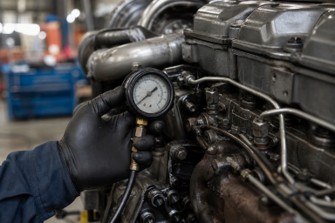
- Test oil pressure, coolant temperature, fuel delivery, and air intake performance.
- Inspect the turbocharger, charge-air system, exhaust plumbing, and sensors.
- Use compression, leak-down, injector, or cylinder-performance testing when indicated.
- Compare all readings with the engine manufacturer’s service limits before authorizing major work.
Maintenance Areas That Deserve Regular Attention
Lubrication System
Use the specified oil grade and service interval for the engine and duty cycle. Oil analysis can help identify fuel dilution, coolant contamination, soot loading, and metal particles before a bearing, piston, or valvetrain issue becomes catastrophic. Replace filters on schedule and investigate pressure loss immediately.
Cooling System
Overheating can damage head gaskets, cylinder heads, liners, pistons, and aftertreatment components. Inspect radiator passages, hoses, belts, thermostats, fan operation, water pumps, and coolant concentration. Repeated overheating is not a normal condition to manage around. It is a root-cause problem to solve.
Fuel And Air Systems
Fuel filters should be changed before contamination restricts flow, and water separators should be checked regularly. Inspect the air filter, intake piping, charge-air cooler, clamps, and turbocharger. Dirty fuel, water contamination, boost leaks, or restricted intake airflow can reduce power, increase smoke, and raise fuel consumption.
Emissions And Exhaust Equipment
Exhaust gas recirculation components, sensors, diesel oxidation catalysts, diesel particulate filters, and selective catalytic reduction systems all require attention where fitted. Warning lights and derates should be diagnosed quickly because a malfunctioning emissions component can affect engine performance and lead to additional damage. The EPA notes that proper maintenance and quality records support fuel economy, engine life, and lower emissions, as explained in its clean diesel maintenance guidance.
Common Causes Of Major Engine Failure
Many severe failures can be traced to a preventable condition that was ignored or misdiagnosed. Frequent causes include extended operation with low oil pressure, coolant loss, overheating, dirty fuel, injector faults, turbocharger failure, skipped fluid service, valvetrain wear, damaged bearings, piston or cylinder damage, and installation errors from earlier repairs.
Repair, Rebuild, Or Replace?
Repair The Existing Engine
A targeted repair can be the right choice when damage is limited, and the engine’s major structure remains sound. It may minimize downtime when parts and qualified labor are available. However, testing must rule out hidden damage that could cause the same failure to return.
Rebuild The Engine
A rebuild may suit an engine with usable core components but significant internal wear. It can restore critical systems while allowing the fleet to retain a familiar engine platform. Insist on documentation for measurements, machining, replaced components, cleaning procedures, and final testing.
Install A Replacement Engine
Replacement may be more practical when damage is widespread, the vehicle has a long remaining service life, or downtime is especially expensive. Confirm engine rating, serial-number requirements, mounting points, wiring, sensors, cooling connections, exhaust equipment, transmission compatibility, warranty terms, and core-return conditions before ordering.
How To Compare Total Cost
The lowest initial quote is not always the lowest-cost decision. Compare the complete scope, including:
- Engine, rebuild kit, or replacement component cost
- Labor, diagnostics, programming, freight, and handling
- Required filters, fluids, seals, hoses, belts, and hardware
- Possible injector, turbocharger, fuel system, or cooling system work
- Expected vehicle downtime and the cost of substitute equipment
- Warranty coverage, exclusions, parts availability, and future service support
A Simple Replacement Planning Checklist
- Record the engine model, rating, serial number, and vehicle application.
- Document the failure with photos, fault codes, and test results.
- Determine whether repair or rebuild is viable before committing to replacement.
- Verify compatibility and inspect external components intended for reuse.
- Replace contaminated fluids, filters, damaged hoses, and compromised wiring.
- Follow specified torque values, calibration steps, start-up procedures, and break-in inspections.
- Save all records for warranty, future diagnostics, and maintenance planning.
Questions Fleet Owners Often Ask
How Often Should A Heavy-Duty Diesel Engine Be Inspected?
Inspection frequency depends on mileage, engine hours, payload, climate, idle time, and duty cycle. Daily walk-around checks should be paired with scheduled service based on the manufacturer’s recommendations and the fleet’s real operating conditions.
Is Smoke Always A Sign Of Major Engine Damage?
No. Smoke color can point toward different concerns, but it should never be evaluated alone. Review smoke alongside oil use, coolant loss, fuel-system data, fault codes, and engine performance.
When Is A Rebuild Better Than A Replacement?
A rebuild can be preferable when the core is sound, parts are available, downtime is manageable, and the vehicle has enough remaining useful life to justify the investment. Replacement may be better when internal damage is extensive or reliability requirements are higher.
Final Thoughts
Heavy-duty diesel engines rarely fail without providing useful clues. Monitoring pressure, temperature, smoke, sound, fluid condition, and fuel use gives fleets time to make informed decisions. A complete diagnosis, accurate service history, and realistic cost comparison can turn an urgent engine problem into a planned repair, rebuild, or replacement with less downtime and less uncertainty.