

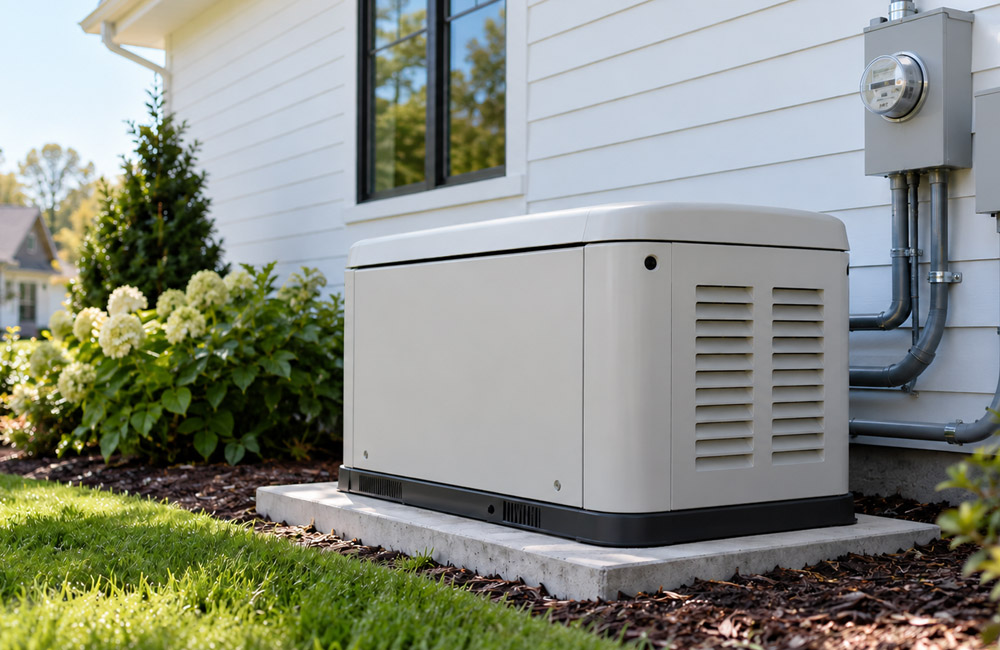
Choosing a standby generator isn’t about grabbing the biggest kW rating you can afford. It’s about backing up the right circuits, managing heavy starting appliances, and matching the system to your fuel supply and home layout. Before shopping, map the essentials you cannot lose, identify 240-volt loads with high inrush current, and decide whether a whole-house automatic transfer switch (ATS), an essential-circuits subpanel, or managed load controls fit your home. This decision framework helps you avoid oversizing, reduce installation complexity, and get a system that performs during real outages, not just on paper.
-
List the Circuits That Truly Need Power
Start with a short, specific list. Typical essentials include the refrigerator and freezer, a few lighting circuits, the Wi Fi router and modem, chargers, the garage door opener, and any medical equipment. Many homes also need water handling equipment such as a well pump or sump pump, and at least one HVAC blower for dehumidification or heat. You can safely skip large electrical loads during an outage, such as an electric range, clothes dryer, pool pump, EV charger, and some electric water heaters. Product resources such as the Select Power Kohler backup power page can help you understand how standby systems pair with automatic transfer switches and load management modules to support these choices.
A common mistake is planning to power every breaker in the panel. That approach inflates the generator size and your fuel draw without improving resilience. Instead, decide what must run at the same time. If you can delay the dishwasher or EV charging until utility power returns, treat them as nonessential. This mindset sets up smarter decisions in the next steps.
-
Translate Appliances Into Running Watts and Starting Surge
Standby generators must handle both running watts and short bursts of starting current. Look for nameplate data: amps multiplied by volts gives running watts. Motors and compressors often list locked rotor amps (LRA), which is the momentary inrush when they start. A 240-volt well pump or a 3- to 5-ton HVAC compressor can spike far above its normal draw for a second or two. Generators have surge capacity, but stacking multiple starts together can cause nuisance trips or voltage dips that stall motors.
There are two levers to make this manageable. First, sequence starts so heavy loads do not kick on simultaneously. An ATS with load shedding modules can delay a water heater or second air handler until the compressor is running. Second, tame inrush where practical: soft-start kits for HVAC compressors and variable-speed well pump controllers smooth the start profile, allowing a smaller generator to perform well. The alternative is buying a larger kW unit solely to cover rare simultaneous starts, which adds cost and fuel consumption with no benefit most of the time.
-
Choose Whole House ATS, Essential Subpanel, or Managed Loads
How you connect determines how much generator you actually need. A whole-house, service-entrance-rated ATS feeds your entire panel. It’s simple to live with, but it often pushes you toward a larger generator unless you also use managed load controls to shed big draws like an electric range or pool pump. An essential circuits subpanel places only critical breakers on backup. That approach keeps generator size down and cleanly separates backed-up from non-backed-up loads, at the cost of extra wiring and some planning.
Two quick scenarios illustrate the tradeoffs. In a rural home with a 5-ton AC, a well pump, and an electric water heater, an ATS plus load shedding and a soft start on the compressor can let a mid-size generator run comfortably, rather than stepping up to a much larger unit. In a townhome with gas heat and cooking, an essential-circuits subpanel backing the fridge, lighting, outlets, and networking may pair well with a compact generator, because there are few surge-heavy 240-volt loads to cover.
-
Fuel Supply and Runtime Shape Sizing Limits
Capacity on paper means little if the fuel supply cannot support it. Natural gas models draw a specific BTU per hour at load; your gas meter and regulators must deliver enough flow and pressure while other appliances (furnace, dryer) are operating. A larger generator requires higher flow, and undersized piping can cause low-pressure shutdowns. With propane, tank capacity, regulator sizing, and ambient temperature influence vaporization and runtime at a given load. If storms make resupply uncertain, build margin into your tank size or dial back nonessential loads. Verify fuel capacity early; it often sets an upper bound on generator size and guides whether load management is necessary.
Placement, Noise, and Electrical Distance Can Nudge Sizing
Location affects performance and comfort. Manufacturers specify clearances from windows, doors, and vents for safe exhaust and intake, and local code may add setbacks from property lines. A level concrete or composite pad in a well-ventilated spot helps the engine breathe and stay cool. Shorter electrical runs to the service equipment reduce voltage drop, which matters when starting motors. If your generator must sit far from the panel, upsizing conductors to control voltage sag can improve starting behavior without oversizing the generator. Consider sound, too: orient the exhaust away from bedrooms and neighbors, and use the enclosure’s factory sound attenuation as intended. In flood-prone areas, raise the pad above expected water levels to avoid damage and keep the transfer equipment accessible.
Right-sizing a standby system comes down to disciplined prioritization: define the circuits you cannot lose, quantify running watts and starting surges, decide on whole-house versus essential-circuit wiring with or without managed loads, and confirm the capacity of your natural gas or propane supply. Placement details and electrical distances round out the plan and can prevent voltage sag headaches during motor starts. Do that work up front and your generator choice will follow naturally, delivering dependable power during outages without the cost and fuel draw of an oversized unit. Set a monthly exercise schedule, keep the area clear, and test the transfer switch yearly so the system is ready when you need it.