

Few things are more frustrating on a plant floor than upgrading to a brand-new filling machine, only to watch bottles back up and jam two stations down. A packaging line is only ever as fast as its slowest step. When your labeling equipment cannot keep pace with the rest of the machinery, your entire run grinds to a halt before products ever make it into shipping boxes.
As highlighted in Packaging World’s guide on line bottlenecks and OEE, real productivity comes down to uncovering and fixing these hidden production traps rather than just speeding up one isolated station. Hand labeling or relying on outdated setups usually tops out around 300 to 500 bottles an hour, while automated systems can easily handle 6,000 or more. Bridging that massive speed gap is the only way to balance the floor and get the actual output you paid for.
Why Does the Labeling Station Cause Packaging Line Bottlenecks?
Upgrading to faster filling machines often exposes the labeling station as the new weakest link in the packaging chain. Overcoming this bottleneck requires automated equipment that balances the line and ensures containers never pile up at the final packaging stage.
When production teams speed up their filling equipment, that extra volume quickly exposes the next slow point down the line. Keeping containers moving smoothly comes down to choosing the right bottle labeling machines for your specific output, whether your setup calls for a flexible semi-automatic unit or a high-speed, fully automatic setup. Matching the machine to your actual production scale keeps the whole line moving together without creating costly delays.
According to a definitive engineering manual by Quadrel, the labeling station frequently serves as the “silent constraint” where Overall Equipment Effectiveness (OEE) is either secured or lost. Equipment performance dictates your ultimate yield. If the labeling equipment lacks the mechanical speed to process high volumes, you lose valuable production capacity.
How High-Speed Label Application Accelerates Production Lines
Understanding exactly how high-speed label application accelerates production lines involves looking closely at conveyor-integrated machinery. These advanced systems eliminate manual handling, crooked labels, and material waste without operator intervention. They provide the consistent output required to keep your facility moving.
Conveyor-integrated systems rely on heavy-duty engineering to process large volumes of containers without unplanned downtime. Bottle labeling machines like the Collamat 7300 series are built specifically for rigorous, continuous use in demanding manufacturing environments. They apply labels uniformly, reducing the material waste associated with constant human error.
Removing the human element from the physical application process stabilizes your daily throughput. Operators can focus on loading bulk supplies and monitoring quality rather than peeling and placing individual stickers. This shift from manual labor to machine supervision increases the total number of units your team can package in a single shift.
Synchronizing Throughput with Upstream Equipment
Automated labelers balance the production line by mechanically matching the rapid pace of upstream fillers. These systems seamlessly separate, transport, and apply labels to containers in a continuous motion. This constant flow prevents backups and stabilizes your daily operational throughput.
Fully automatic bottle labeling systems are conveyor-integrated machines designed to separate, transport, and label containers automatically without operator intervention. This definition highlights their primary function as a seamless extension of your existing packaging line. They take the chaotic flow of filled bottles and organize them into precise intervals for accurate labeling.
Labeling is not just a visual branding necessity for the consumer. It is a highly precise operational step that must maintain exact timing without acting as a physical constraint. Advanced spacing wheels and top hold-down belts keep the containers perfectly aligned as they pass the label applicator head.
When the applicator speed matches the conveyor speed, the label placement remains perfectly flat and level. This mechanical synchronization ensures that the line runs continuously without hesitation. Products move straight from the filler to the labeler and directly into the shipping boxes without pause.
How Does Real-Time Data Integration Prevent Line Stoppages?
Print-and-apply systems prevent offline delays by generating variable compliance data directly on the moving line. Managing barcodes, lot codes, and expiration dates on the fly eliminates the costly production lag associated with pre-printing and staging labels in separate batches.
Pre-printing labels offline for regulatory compliance creates a massive logistical delay. If a batch requires a specific expiration date or lot code, operators must stop the line, locate the correct roll, and manually thread the new labels into the machine. Print-and-apply units solve this problem completely.
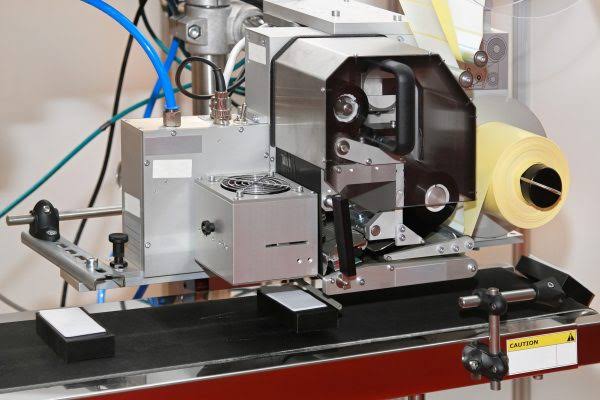
Systems like the Auto Labe Model 155 use programmable logic controllers (PLCs) and touchscreen controls to integrate thermal print engines directly into the applicator. They print the required data onto the label a fraction of a second before it meets the bottle. This integration is vital for industries with strict tracking and tracing requirements.
Generating variable data on the line eliminates the need to stop production for compliance changes. You no longer have to stockpile hundreds of different pre-printed rolls in your facility inventory. The machine adapts to the required data automatically, keeping the packaging line running at optimal speed.
Conclusion
Moving beyond the filler bottleneck requires matching your upstream speed with highly synchronized, automated labeling equipment. Overcoming the limits of manual packaging processes protects your facility from hidden constraints that ruin daily output.
By enabling rapid changeovers and integrating real-time variable data, automated labelers directly improve your Overall Equipment Effectiveness. These systems keep the line moving continuously, reduce costly material waste, and eliminate the need for offline staging.