

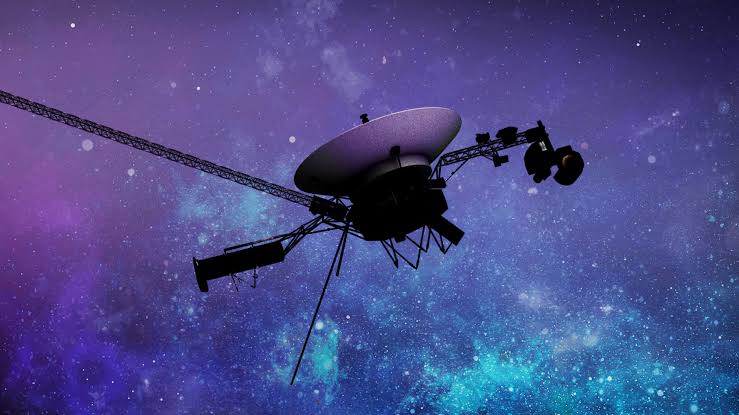
The cosmos is one of the most unforgiving environments imaginable. Beyond the safety of Earth’s atmosphere, spacecraft face drastic temperature swings, relentless solar radiation, high-energy cosmic rays, and the absolute vacuum of deep space. Under these extreme conditions, even a microscopic component failure can trigger mission-ending consequences. Building a spacecraft that operates flawlessly requires extraordinary precision engineering, advanced material science, and uncompromising quality standards.
From orbital communications satellites to deep-space probes, several core components and structural subsystems form the backbone of modern spacecraft technology.
1. Robust Structural Frameworks and Extrusions
A spacecraft’s structural frame serves as its skeleton, bearing immense mechanical stress, acoustic vibrations, and launch acceleration. To balance structural rigidity with strict mass limitations, engineers utilize custom-built aerospace extrusions and advanced lightweight composites. High-strength titanium alloys and carbon-fiber-reinforced polymers (CFRPs) are industry standards because they provide exceptional strength-to-weight ratios and resist fatigue.
Fabricating these structural panels and precision brackets requires specialized industrial capabilities. Facilities relying on advanced tool and die manufacturing produce the custom tooling required to stamp, shape, and form ultra-precise metallic components with extremely tight tolerances. These structural foundations protect delicate interior avionics and payload instruments from external forces during launch and subsequent orbital maneuvers.
2. Advanced Power Generation and Management
Without continuous power, a spacecraft quickly becomes space debris. Solar panel arrays function as the primary powerhouse for most earth-orbiting and inner-planetary missions. Modern solar cells convert sunlight into electrical power with high efficiency, feeding complex power distribution networks that energize every onboard subsystem.
Because satellites experience orbital night when passing through planetary shadows, onboard energy storage systems—such as high-capacity lithium-based batteries—take over seamlessly. Power management and distribution units ensure regulated voltages reach sensitive scientific instruments, transmitters, and electric thrusters without risky power spikes.
3. Thermal Control and Radiation Protection
In space, temperatures can plunge to -150°C in the shade or soar past +120°C in direct sunlight. Thermal control systems are essential to maintain internal operating temperatures within narrow limits. Active and passive solutions—including multilayer insulation blankets, heat pipes, louvers, and external radiators—evacuate excess heat generated by onboard electronics while retaining warm operational temperatures in deep cold.
Simultaneously, radiation protection is critical. Earth’s magnetosphere shields low-orbit craft to a degree, but deep-space probes are exposed to intense galactic cosmic rays and solar particle events. Heavy radiation shielding, conformal coatings, and radiation-hardened microprocessors safeguard internal electronics against bit-flips and physical hardware destruction.
4. Guidance, Navigation, and Control (GNC) Systems
Maintaining precise orientation is vital for pointing high-gain antennas toward Earth, aligning solar arrays with the sun, and aiming scientific sensors. The Guidance, Navigation, and Control (GNC) system acts as the navigational brain of the spacecraft.
GNC hardware includes:
- Star Trackers and Sun Sensors: Optical devices that determine absolute spatial orientation by referencing celestial bodies.
- Gyroscopes and Accelerometers: Inertial measurement units that track rotational rates and velocity changes.
- Reaction Wheels and Magnetorquers: Control actuators that manipulate momentum to rotate the spacecraft without expending chemical propellant.
5. Specialized Adhesives and Cleanroom Assembly
Putting together a spacecraft involves more than standard mechanical fasteners. High-stress flight environments call for specialized mil-spec epoxy adhesives to bond structural components, secure optical lenses, and dissipate thermal load. These specialized materials must endure severe outgassing prevention standards so that volatile compounds do not condense onto sensitive optics or solar arrays in a vacuum.
Furthermore, assembly occurs within strictly monitored cleanrooms. Maintaining sterile environmental control over air purity, humidity, and static buildup prevents microscopic dust particles from degrading delicate electronic assemblies.
Conclusion
Every successful mission into orbit or beyond stands as a monument to human ingenuity and precision engineering. By combining resilient structural frameworks, dynamic thermal protection, intelligent GNC units, and rigorous cleanroom assembly, engineers create machines capable of thriving in the cosmos. As space exploration pushes toward deep-space missions and lunar habitats, continuous advancements in materials, power systems, and precision manufacturing will keep humanity’s most ambitious spacecraft operating reliably among the stars.