

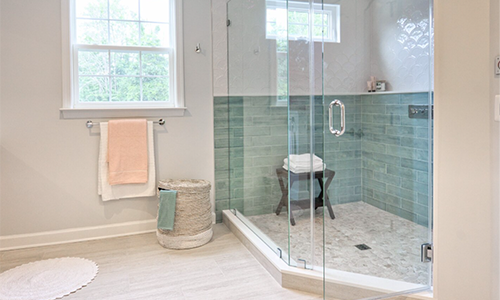
Framed, semi-frameless and frameless shower screens differ mainly in how the glass is supported and how much framing remains visible. Framed designs use aluminium around the enclosure, semi-frameless designs reduce the amount of visible framing, and frameless designs rely on discreet fittings rather than a continuous perimeter frame.
The right choice depends on bathroom dimensions, door clearance, water containment, cleaning preferences, budget and the overall design. Understanding how each system works helps homeowners compare options on practical grounds rather than appearance alone.
Australian safety requirements also affect how shower glazing is specified. Under the National Construction Code (NCC), glazing in shower enclosures must meet specific safety requirements depending on its construction and whether glass edges are exposed.
How Custom Shower Screens Work With Different Bathroom Layouts
Custom shower screens can be configured around the dimensions and layout of a bathroom, which is particularly useful when the available opening does not suit a standard configuration.
Start with the shower position. A recessed shower between three walls has different requirements from a corner enclosure or an open walk-in arrangement. The location of the vanity, toilet and towel rails can also determine whether there is enough clearance for a pivoting door.
Framed and semi-frameless screens are available in sliding and pivot configurations, giving homeowners options for different room dimensions. Where floor space is limited, a sliding door can remove the need for an outward door swing.
The shower head also needs to be considered. An opening positioned directly in the spray path can allow water to escape regardless of how minimal or substantial the framing is.
Measure from finished surfaces where possible. Tiles and other finishes can change the final opening, and existing walls may not be perfectly square or plumb.
What Does a Framed Shower Screen Offer?
A framed shower screen supports the glass within aluminium framing around the enclosure. The frame supports the glass panels and creates clearly defined edges around the shower area.
Framed systems can be configured with pivot or sliding doors, making them suitable for different bathroom layouts. Sliding doors are particularly practical where a vanity, toilet or wall restricts the space available for a door to swing.
Framed systems can use toughened glass with options such as clear, tinted or textured glazing, depending on the selected system. Aluminium is also available in different finishes, allowing the frame to coordinate with tapware and other bathroom fittings.
The main maintenance consideration is the amount of framework. Tracks, joins, and channels create additional edges where soap residue and mineral deposits may collect. Regular cleaning around these areas helps prevent build-up.
A framed design suits bathrooms where a defined enclosure and a flexible door configuration meet the space’s practical requirements. The visible frame can then be selected to coordinate with the broader bathroom design.
How Do Semi-Frameless Shower Screens Work?
Semi-frameless shower screens reduce the amount of aluminium surrounding the glass without eliminating structural framing altogether.
Exactly where the framing remains depends on the system. Some configurations use framed outer sections with less metal around the doors, while sliding designs can use overlapping glass panels and dedicated tracks.
The reduced framing gives the enclosure a lighter appearance and leaves more glass exposed. It suits bathrooms where cleaner sightlines are preferred alongside some structural framing.
Semi-frameless designs can also offer pivot and sliding configurations. The distinction matters in compact bathrooms because door operation directly affects how much usable space remains around the shower.
Cleaning requirements depend on the particular configuration rather than the label alone. Check where tracks, seals, overlaps and channels are positioned and whether they can be reached easily.
Two semi-frameless products can therefore look and function differently. Comparing the amount and position of framing provides a clearer indication of how each option will work in the bathroom.
What Makes a Frameless Screen Different?
A frameless screen removes the continuous aluminium perimeter around the glass. Panels are instead supported using components such as brackets, hinges and discreet channels where required.
This construction creates clearer sightlines through the bathroom. Feature tiles, stone, and other finishes remain more visible because fewer metal sections divide the enclosure.
The reduced framework makes accurate specification particularly important. Glass dimensions, hardware positions, wall conditions and door movement all need to work together. Suitable fixing points are also necessary to support the hardware.
Australian glazing rules provide a clear safety baseline. NCC 2022 Housing Provisions clause 8.4.6 requires Grade A safety glazing material for framed panels in relevant bathroom and shower applications. Panels or doors with an exposed edge must use toughened safety glass, with a minimum nominal thickness of 6 mm, and further requirements apply according to pane size.
Frameless does not necessarily mean an open shower. The design can incorporate fixed panels and doors depending on the enclosure and required access.
Which Shower Screens Are Easier to Clean and Use?
Cleaning depends largely on the number of tracks, joins, seals and fittings.
Framed systems contain more channels and edges that require detailed cleaning. Semi-frameless systems reduce some of these areas. Frameless designs have fewer perimeter channels, although the glass, hinges and other fittings still need routine care.
Daily usability depends more heavily on the bathroom layout. Before choosing a configuration, check:
- whether a hinged or pivot door has enough opening clearance
- whether a sliding door would make better use of a compact space
- whether fixed panels leave accessible areas for cleaning
- where water is likely to travel from the shower head
- whether the entry width is suitable for the people using the bathroom.
Water containment is influenced by several parts of the shower design. Shower-head direction, panel dimensions, door overlaps, seals, floor falls, and drainage can all affect how effectively water remains within the wet area.
Considering these factors together provides a more useful comparison between screen configurations and helps identify practical issues before installation.
What Should Be Checked Before Installation?
Final dimensions, glass safety requirements and fixing conditions should be confirmed before installation.
Wall and floor finishes can change the dimensions originally shown on building plans, so measurements taken after tiling can provide a more accurate picture of the available opening. Fixing locations also need to be suitable for the selected hardware and screen configuration.
Cleaning access deserves attention at this stage. A fixed panel positioned very close to a vanity may technically fit yet leave a narrow gap that is difficult to reach. Providing usable access around the glass makes routine cleaning easier.
Hardware finishes can then be considered alongside tapware, towel rails and cabinet handles. This helps the screen fit naturally within the bathroom design.
For renovations in particular, resolving these details before ordering reduces the risk of discovering that a preferred door movement or panel arrangement conflicts with another bathroom fixture.
Conclusion
Choosing between framed, semi-frameless and frameless shower screens starts with how the bathroom needs to function.
Framed systems provide a defined enclosure and flexible door configurations. Semi-frameless designs reduce visible aluminium while retaining structural framing. Frameless designs minimise perimeter framing and place greater emphasis on accurate glass, hardware and fixing specifications.
The final decision should account for room dimensions, door movement, water direction, cleaning access, and Australian safety glazing requirements. Resolving these practical factors first helps the screen suit both the bathroom design and everyday use.